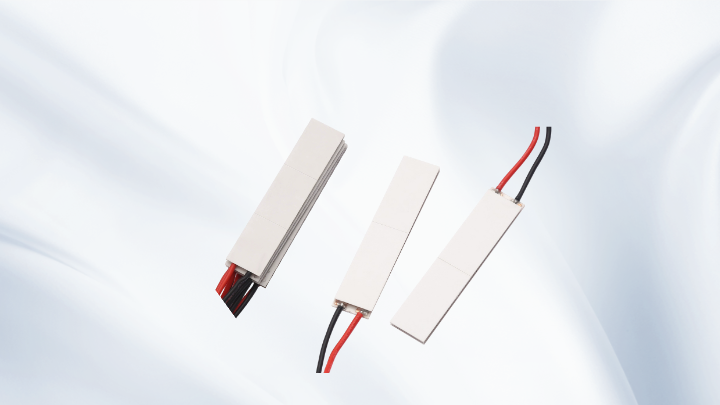
16.8*76.7*2.55mm Medical Device PCR Cooler is a miniature thermoelectric cooler (TEC) specifically engineered for polymerase chain reaction (PCR) instruments. Utilizing the thermoelectric effect (Peltier effect) for precise temperature control, its ultra-thin (2.55mm) and and elongated dimensions (76.7mm × 16.8mm), it seamlessly integrates into compact, portable PCR medical devices. As the core component for temperature cycling control in PCR experiments, it directly determines the accuracy and efficiency of DNA amplification. Widely adopted in clinical diagnostics, nucleic acid testing, and biological laboratories, it serves as an essential tool across diverse medical applications.
Specific Applications in the Medical Field of Semiconductor Heat sink
As a core temperature control component for medical devices, this 16.8*76.7*2.55mm PCR cooler is highly focused on medical applications: primarily used in portable PCR instruments, fluorescent quantitative PCR instruments, and nucleic acid testing integrated machines. It supports clinical and research applications such as COVID-19 nucleic acid testing, genetic disease diagnosis, and paternity testing. Capable of meeting routine laboratory PCR testing requirements while also accommodating the miniaturization demands of point-of-care testing (POCT) devices, it delivers stable and reliable temperature control for precision medical diagnostics. Additionally, it serves as an auxiliary temperature control solution for other medical equipment including precision thermostats and blood analyzers.
![]()
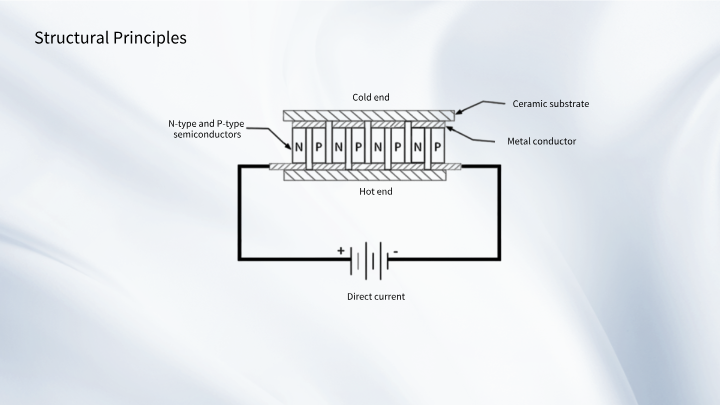
The core operating principle of this PCR chiller is based on the Peltier effect. It is assembled using high-strength P-type and N-type bismuth telluride thermoelectric materials and a highly thermally conductive DBC ceramic substrate. Without requiring compressors, refrigerants, or other wear-prone components, it achieves directed heat transfer solely through direct current drive. Upon energization, current flows through the semiconductor thermocouple circuit, creating distinct hot and cold zones across the chiller's surface. The cold side contacts the PCR reaction plate, rapidly absorbing heat from the reaction system to achieve cooling. The hot side dissipates heat through its heat sink structure, ensuring sustained and stable cooling. By reversing the current direction, the device can swiftly switch to heating mode, precisely matching the three-cycle temperature requirements of PCR experiments: “90-95°C denaturation → 55-65°C annealing → 70-75°C extension.” Temperature control accuracy reaches ±0.1°C, effectively preventing amplification failures caused by temperature deviations.
PCR semiconductor chillers possess specialized features tailored for medical PCR equipment
![]()
With its dedicated dimensions of 16.8 × 76.7 × 2.55 mm, this chiller features specialized characteristics tailored for medical PCR equipment: First, its ultra-thin, elongated design with a 2.55mm thickness maximizes space savings within PCR instruments. The 76.7mm × 16.8mm aspect ratio precisely aligns with PCR reaction plates, enabling zone-specific temperature control. This minimizes “edge effects” and ensures uniform temperature distribution across all 96 wells. Second, medical-grade reliability: Utilizing high-temperature solder and elastic gel “soft assembly” techniques alleviates thermal stress from alternating heating and cooling cycles. It reliably operates over 100,000 cycles within the typical PCR temperature range of 0-95°C, with a standard service life exceeding 20 years. All metal components undergo anti-oxidation and anti-corrosion treatment, complying with RoHS medical environmental standards. Third, vibration-free and noise-free operation. The pure solid-state structure eliminates mechanical movement, preventing interference with PCR reaction stability while eliminating refrigerant leakage risks, aligning with medical laboratory clean environment requirements; Fourth, it offers rapid response with heating/cooling rates of 3-5°C per second, reducing traditional PCR run times from 2 hours to 30 minutes for significantly enhanced testing efficiency. Cooling capacity is precisely controlled via adjustable current settings to meet diverse PCR temperature requirements. Its limitation lies in relatively lower cooling efficiency compared to traditional compressor-based systems, making it more suitable for low-power, small-temperature-difference PCR temperature control scenarios. High-power PCR equipment can be accommodated by combining multiple modules.












 Get A Free Quote