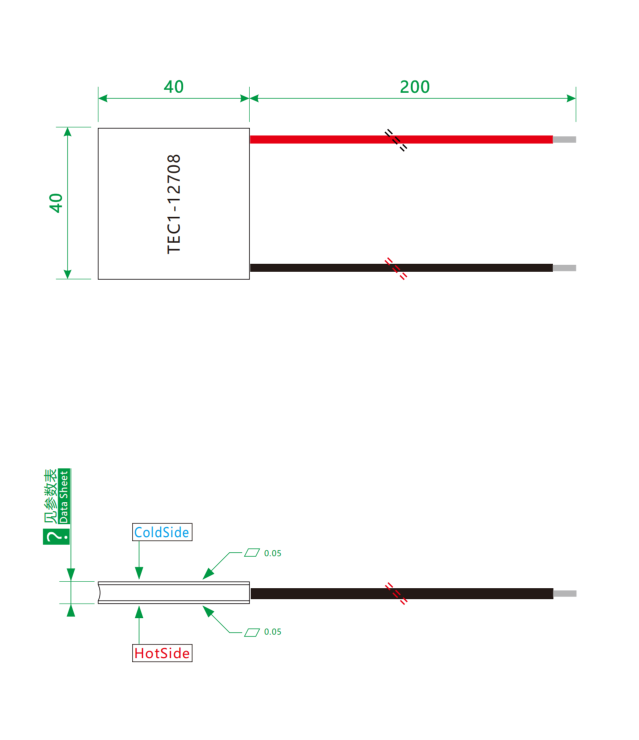
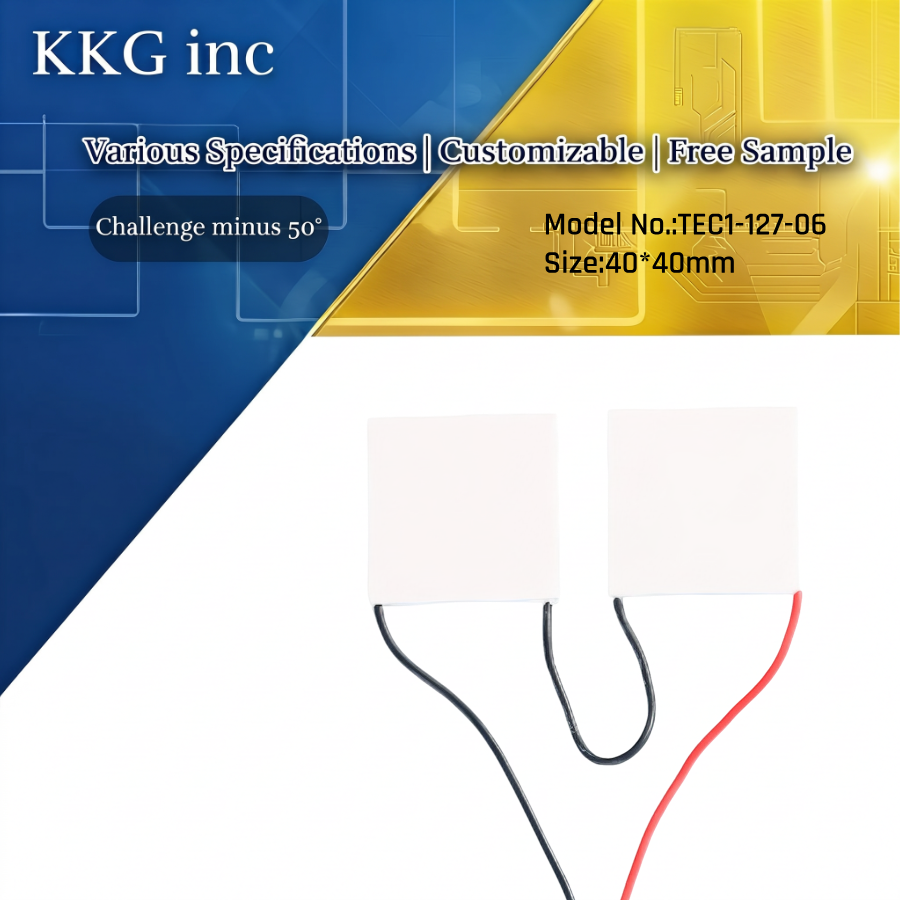
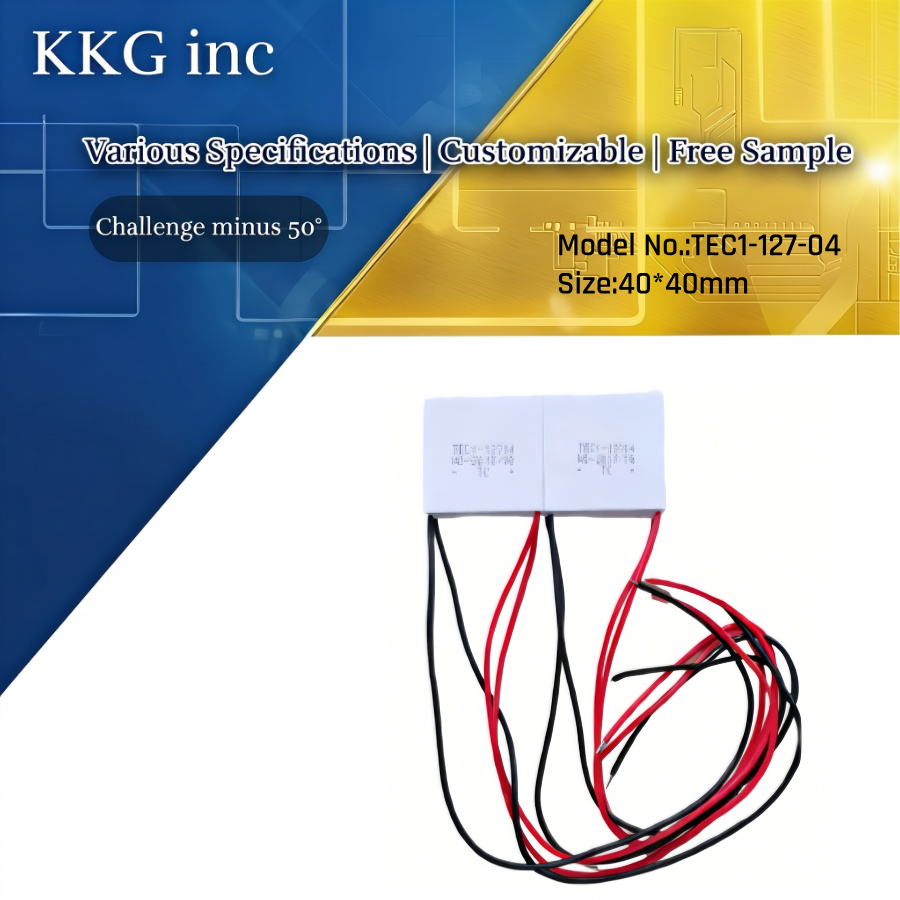
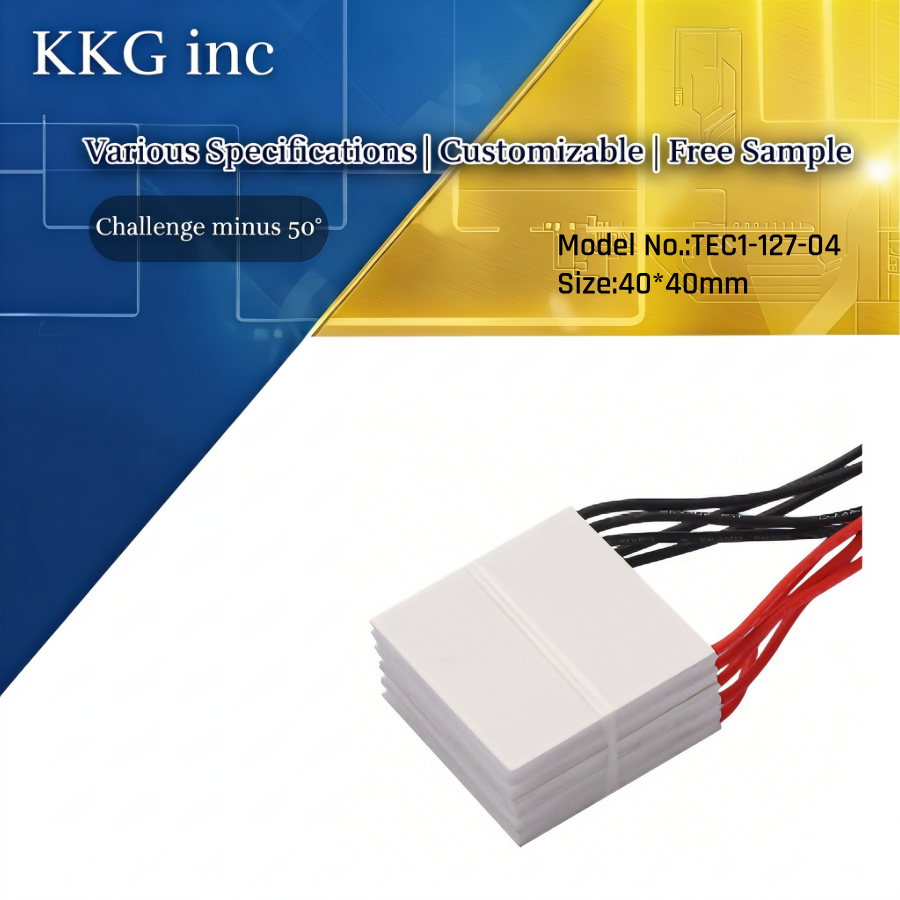
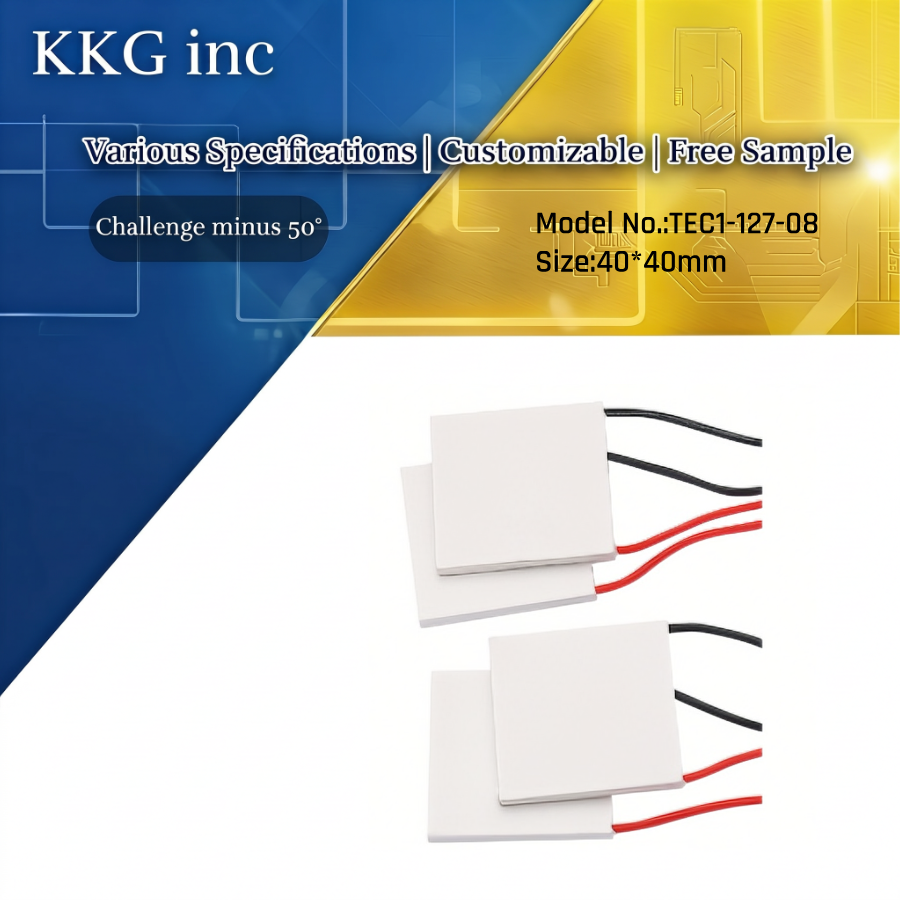
🔷Product Drawing
![]()
🔷Basic Performance Spec
| Type Model | Chip | Max Temp Difference | Internal Resistance | Max Voltage | Max Current | Max Power | Dimensions |
|---|
| TEC1-12708 | K10 | 60 | | | | | 40x40x3.4 |
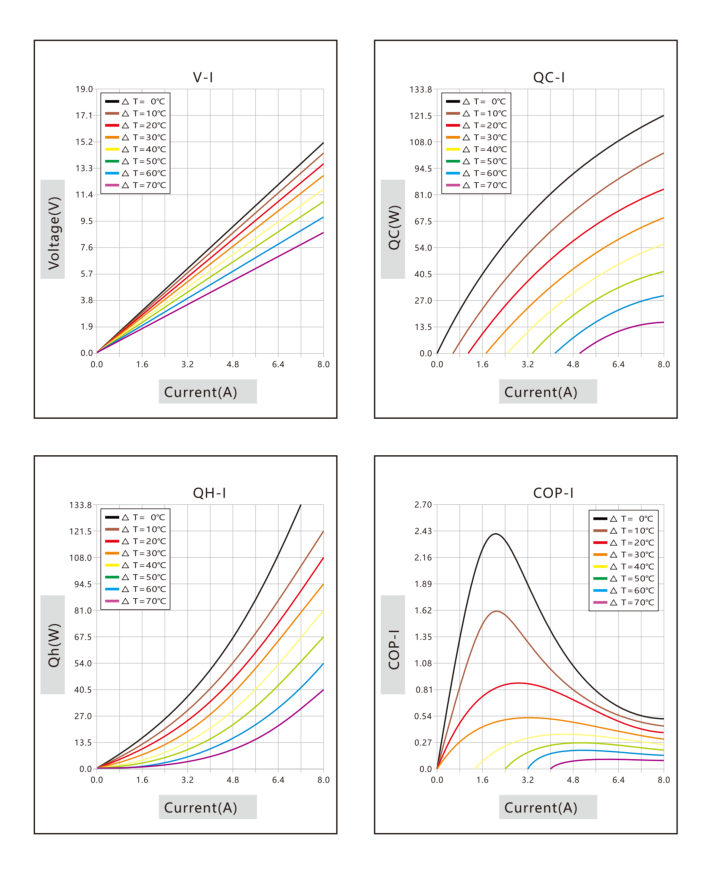
| K12 | 65 | 1.48 | 15.2 | 8 | 122 | 40x40x3.6 |
| K14 | 70 | | | | | 40x40x3.8 |
🔷 Additional Performance Spec
| Specification Item | Details |
|---|
| Substrate Specification | 96% Alumina 0.76mm + Oxygen‑Free Copper 0.4mm, sintered process |
| Lead Wire Specification | Extra‑soft silicone wire, 18AWG, L=200mm |
| Terminal Specification | Standard product without terminals; can be fitted upon request |
| Assembly Pressure | 4kg (0.25kg/cm²) |
| Packaging Standard | Polystyrene (PS) foam box |
| Sealant Material | 704 silicone rubber sealant |
| Maximum Temperature Resistance | Bismuth‑tin eco‑friendly solder, melting point 138°C |
| Storage Environment | Temperature <120°C, Humidity <60% Rh |
🔷 Performance Curve
![]()
🔷 Product Overview
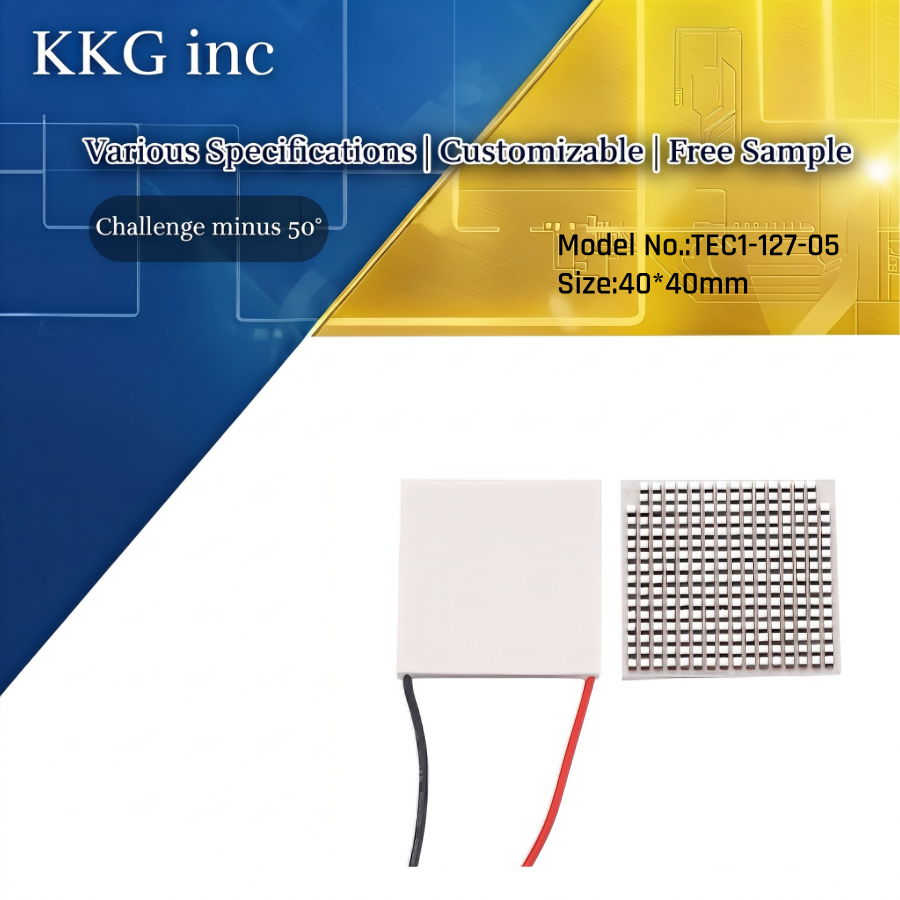
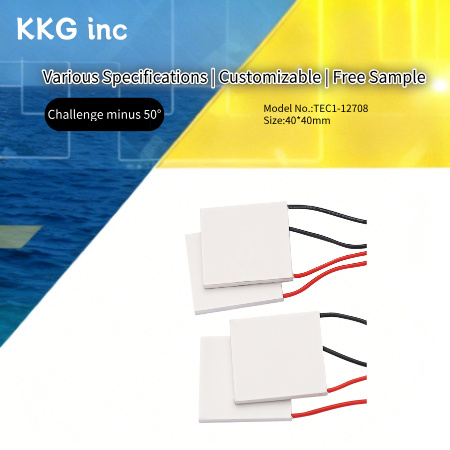
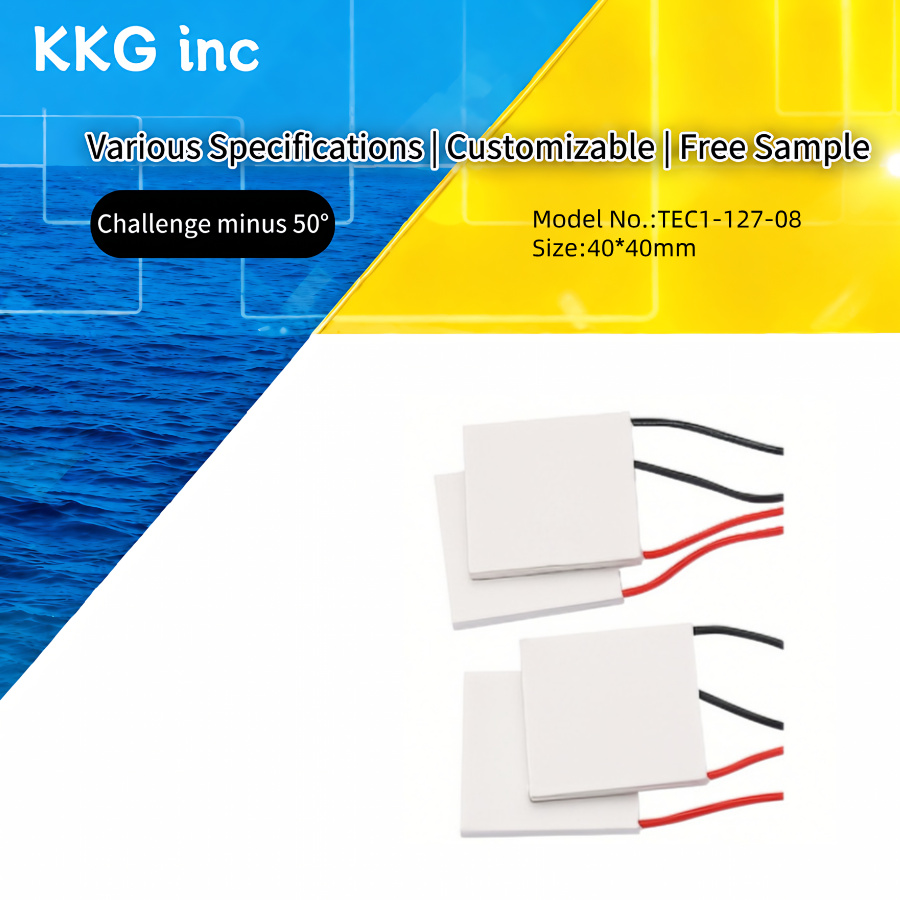
The TEC12708 semiconductor cooler module is a compact thermoelectric cooling chip, also known as peltier cooler. As a solid‑state cooling component without refrigerant, it realizes fast heating and cooling by the thermoelectric effect. We are a reliable semiconductor cooler supplier, supporting bulk purchase of standard modules.
🔷 Product Features
- High cooling‑efficiency, this high‑power semiconductor cooling element delivers stable refrigeration output.
- Solid‑state structure, no vibration, no noise, no refrigerant, safe and eco‑friendly.
- Bidirectional temperature control: switch between cooling and heating freely.
- Support OEM semiconductor cooling module & custom semiconductor peltier cooling plate service.
- Compact size, easy to install into small‑space temperature‑control equipment.
- Long working life, low failure rate for 24‑hour continuous operation.
🔷Product Applications
Our semiconductor cooler for industrial chiller, semiconductor cooler for laser cooling and semiconductor temperature control cooling module are widely adopted in multiple industries:
- Laser equipment temperature control
- Industrial water chiller system
- Medical & laboratory equipment cooling
- Semiconductor peltier refrigeration unit for small‑size refrigerators
- Electronic component heat dissipation
- Beauty instrument cooling system
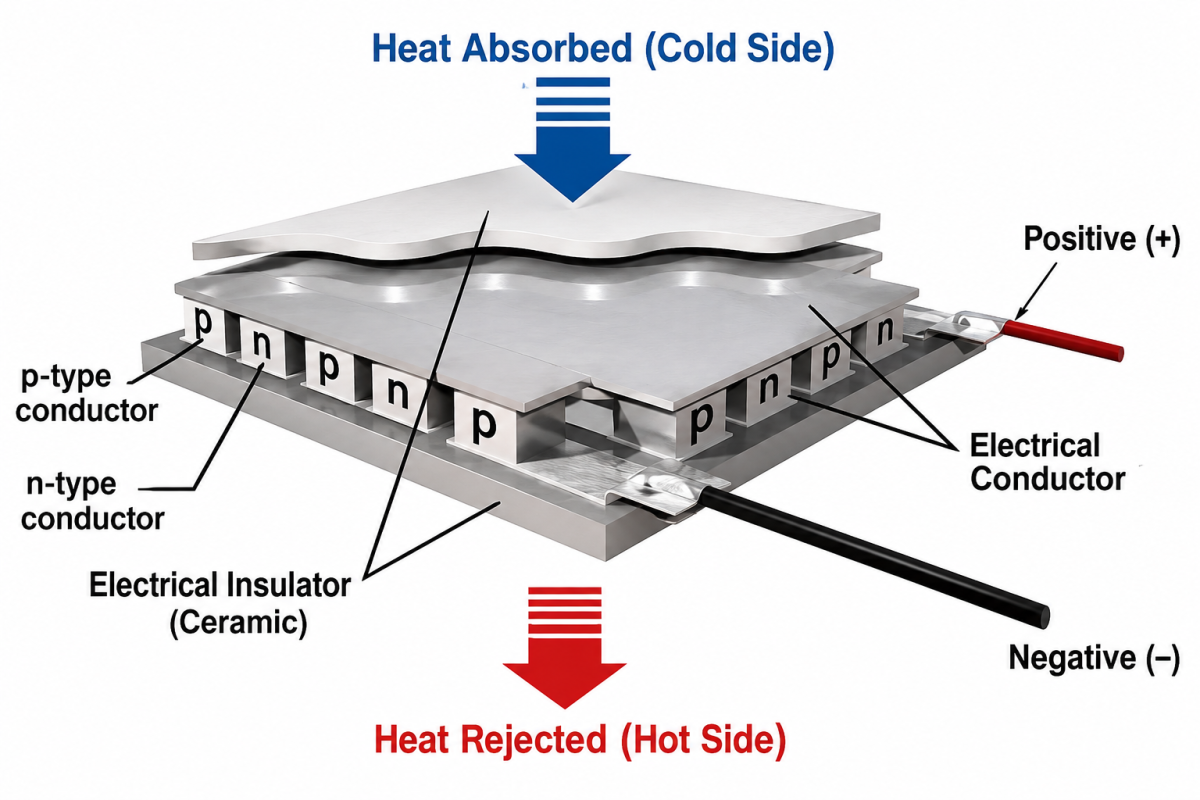
- 🔷 Product Structure
![]()
🔷Operation Principle
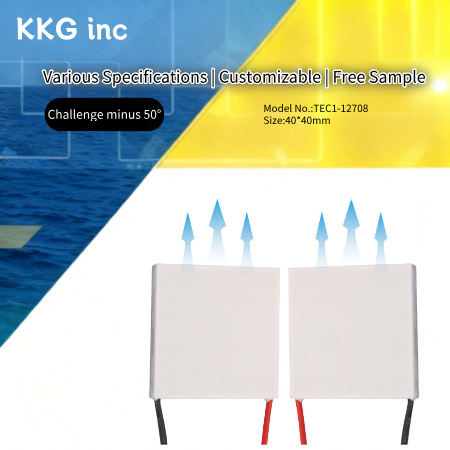
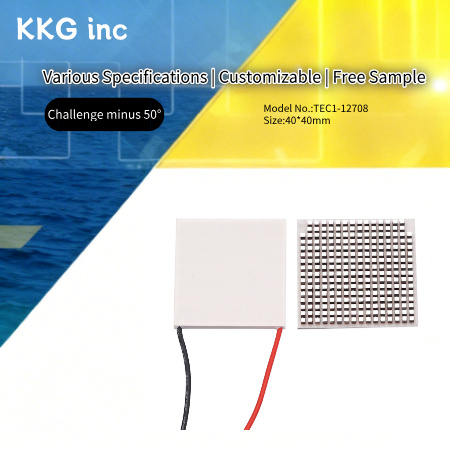
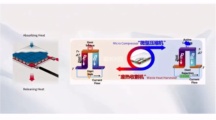
This semiconductor cooler module works based on the Peltier effect. When DC current flows through the thermoelectric chip, one ceramic surface absorbs heat (cold side) while the other side releases heat (hot side). By reversing the DC current direction, you can switch between cooling and heating mode. No compressor is required for the semiconductor peltier refrigeration unit.
🔷FAQ
Q1: Can I get wholesale semiconductor thermoelectric cooler of TEC12708?
A1: Yes, we support wholesale, bulk purchase semiconductor cooler and long‑term OEM cooperation.
Q2: Do you provide custom semiconductor peltier cooling plate service?
A2: Custom semiconductor peltier cooling plate, special‑size semiconductor cooler module and heat sink assembly are available.
Q3: Can the TEC12708 semiconductor cooler for laser cooling run 24 hours non‑stop?
A3: Yes, but you must match a proper heat‑dissipation system for the hot‑side to avoid overheating damage.









 Get A Free Quote