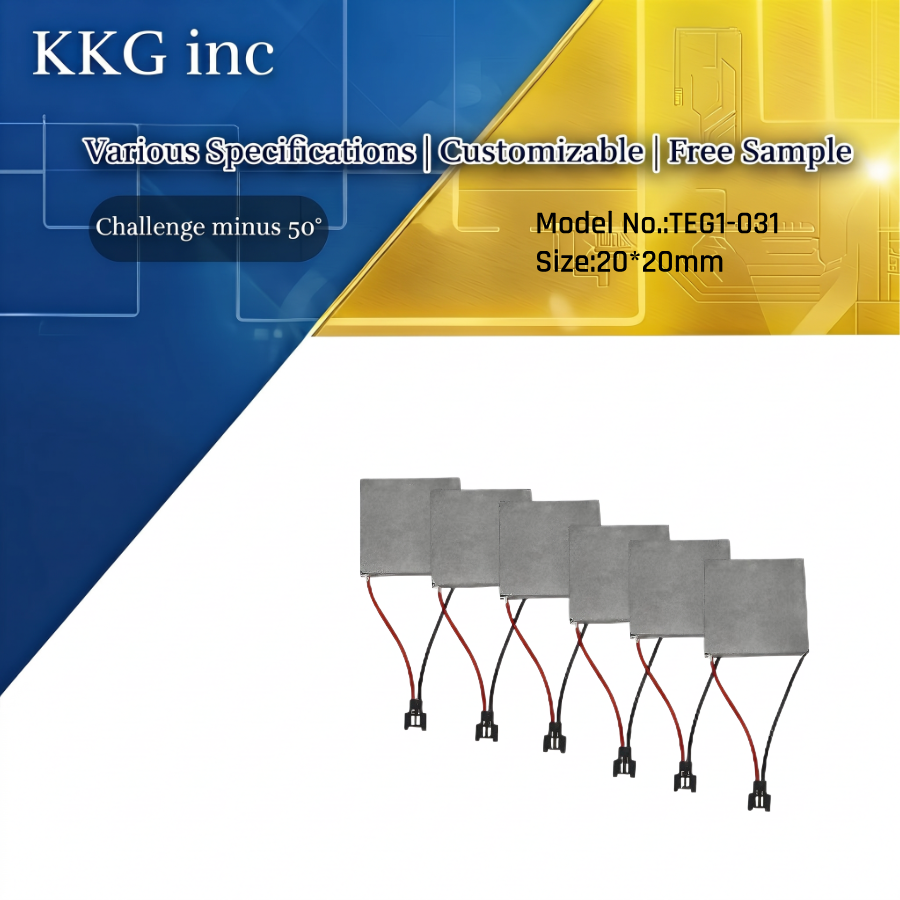
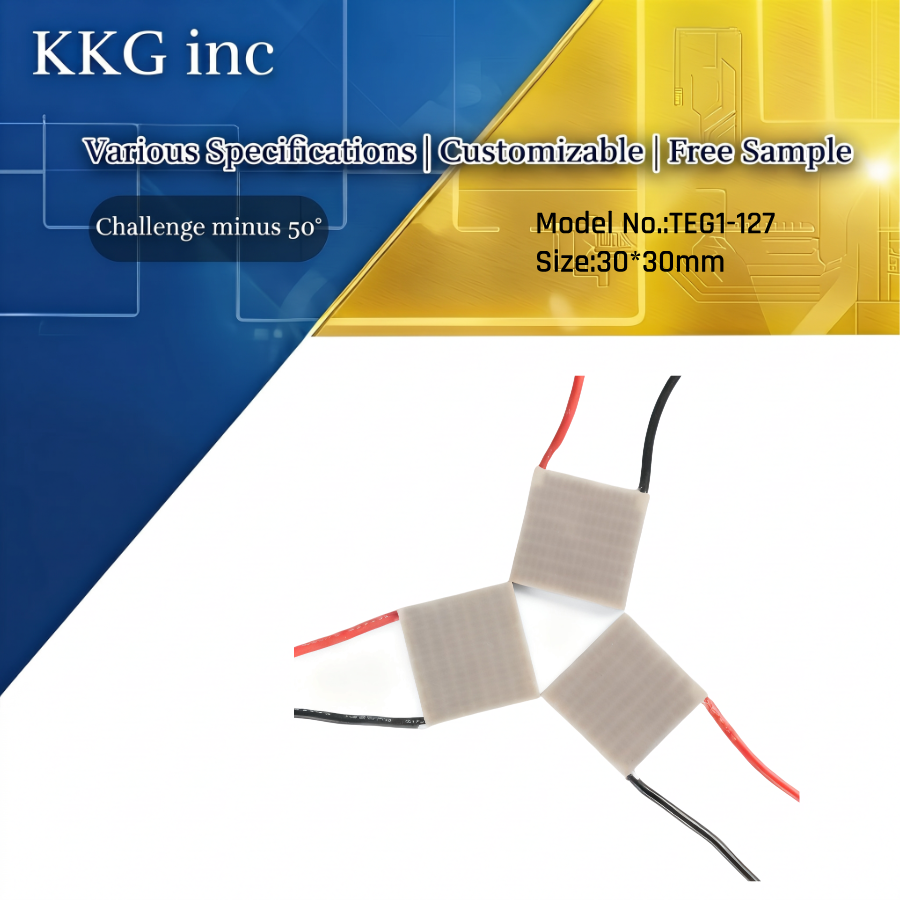
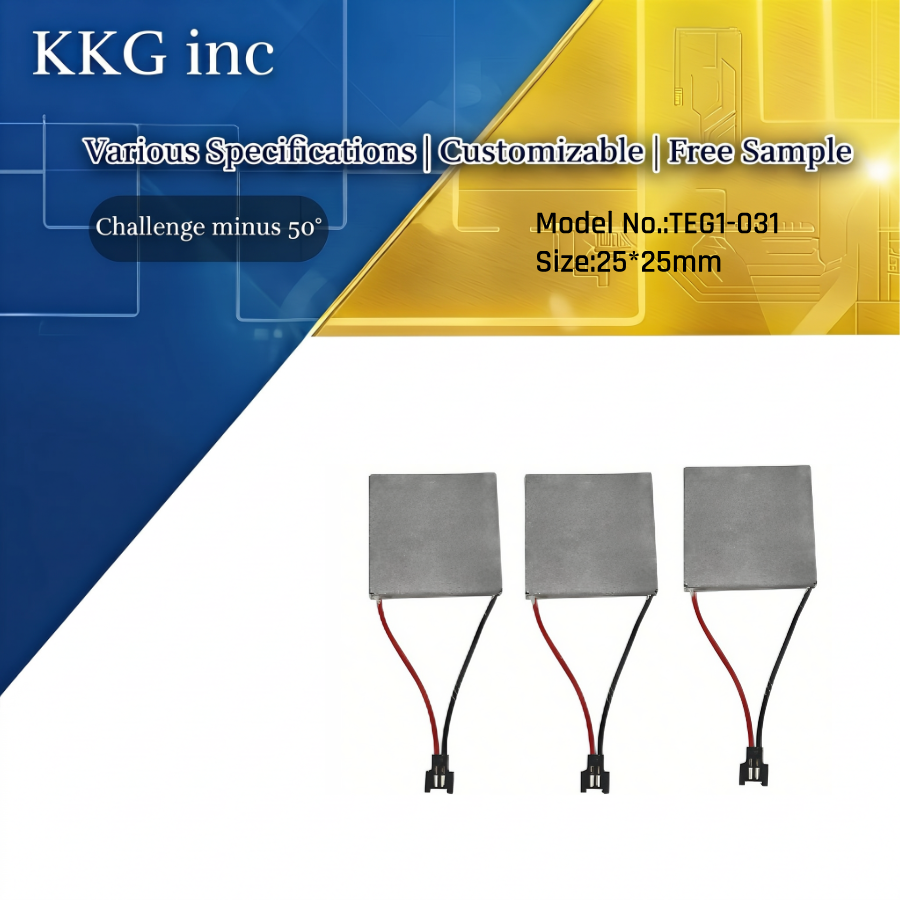
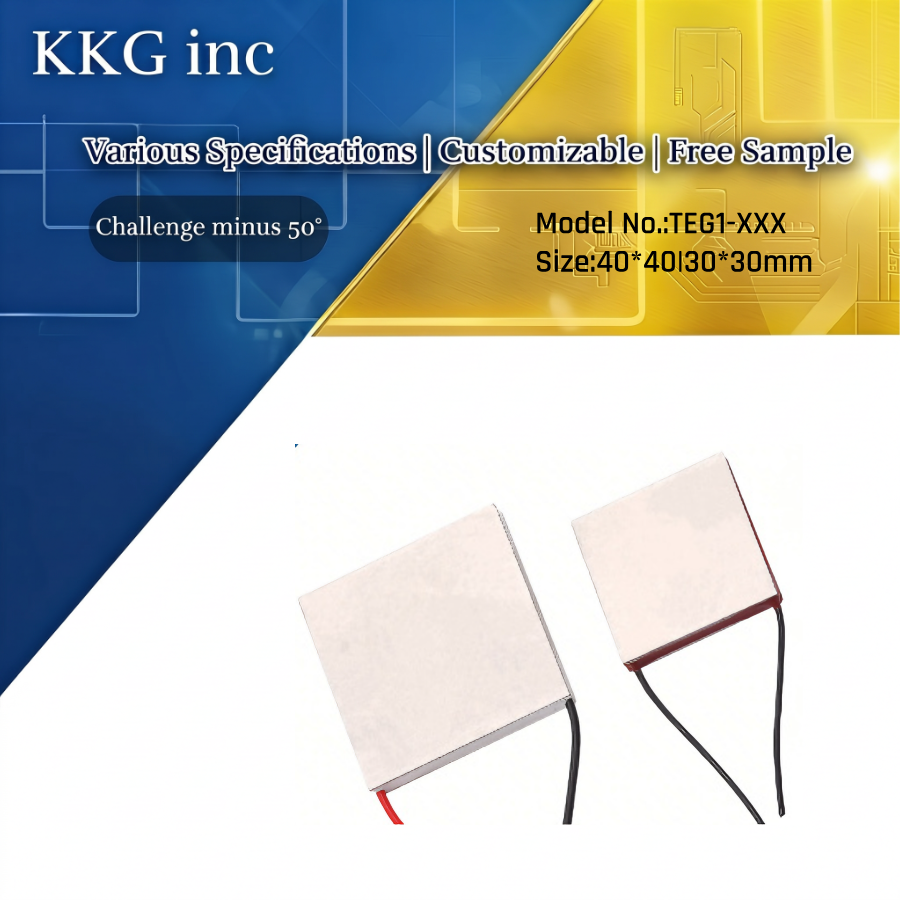
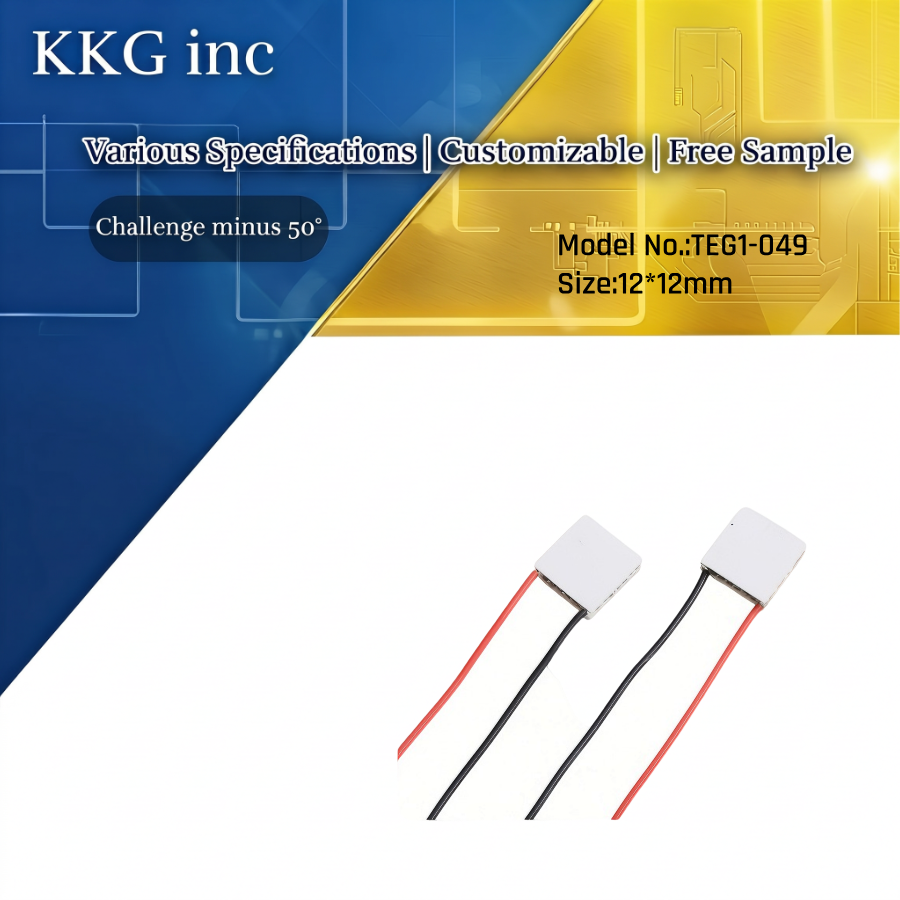
Product Description of Thermoelectric Cooler
The thermoelectric generator is assembled using high-strength bismuth-based thermoelectric material, high-thermal-conductivity, high-insulation DBC (directly bonded copper) ceramics, and high-temperature solder, making it suitable for use in environments where the hot side reaches 200°C.
Product Features of Peltier Cooler
High performance: Achieves a power conversion efficiency of 5% even under a 200°C temperature difference.
High reliability: Typical service life exceeds 10 years.
High-temperature resistance: The hot side can operate in environments up to 200°C.
Compliant with RoHS requirements.
Customization services available.
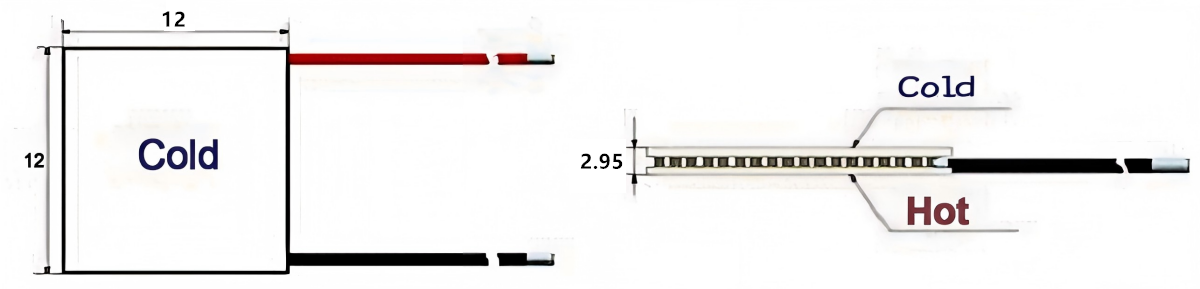
Peltier Module’s Product Drawing
![]()
Encapsulation Resin Types of TEC Cooler
| Code | Encapsulation Resin Type | Color | Description |
| NS | No encapsulation | — | — |
| White | Silicone rubber | White | Non-corrosive, RoHS compliant |
| Red | Silicone rubber | Red | Non-corrosive, RoHS compliant |
| CS | Custom encapsulation | — | Meets customer-specific customization requirements |
Performance Parameters of Thermoelectric Cooler Peltier
(Data based on cold side temperature = 30°C; hot side temperature = 130°C; temperature difference = 100°C)
| Model | Alias | Ri (Ω) at Different Temperatures | | | | | Dimensions (mm³) | | |
| | 30°C | 50°C | 100°C | 150°C | 200°C | Length L | Width W | Thickness H |
| TEG1-4906 | | 2.05 | 2.21 | 2.62 | 3.03 | 3.44 | 12 | 12 | 2.95 |
| Hot Side Temp (°C) | Cold Side Temp (°C) | Temp Difference (°C) | Open-Circuit Voltage (V) | Open-Circuit Current (A) | Max Output Power (W) |
| 40 | 30 | 10 | 0.21 | 0.06 | 0.00 |
| 50 | 30 | 20 | 0.42 | 0.13 | 0.01 |
| 60 | 30 | 30 | 0.60 | 0.18 | 0.03 |
| 70 | 30 | 40 | 0.80 | 0.23 | 0.05 |
| 80 | 30 | 50 | 1.00 | 0.28 | 0.07 |
| 90 | 30 | 60 | 1.20 | 0.32 | 0.10 |
| 100 | 30 | 70 | 1.40 | 0.36 | 0.13 |
| 130 | 30 | 100 | 2.00 | 0.51 | 0.25 |
| 150 | 50 | 100 | 1.95 | 0.42 | 0.21 |
| 200 | 130 | 100 | 1.86 | 0.36 | 0.17 |
| 200 | 50 | 150 | 2.78 | 0.56 | 0.39 |
Performance Curves of Peltier Cooling Module
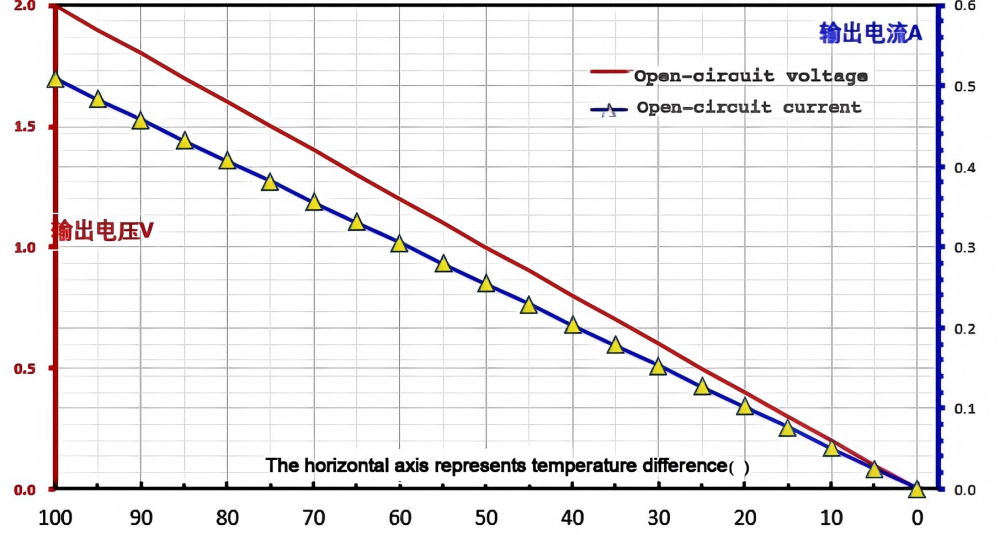
At a hot-end temperature of 130°C, the temperature-versus-output voltage and temperature-versus-output current curves
![]()
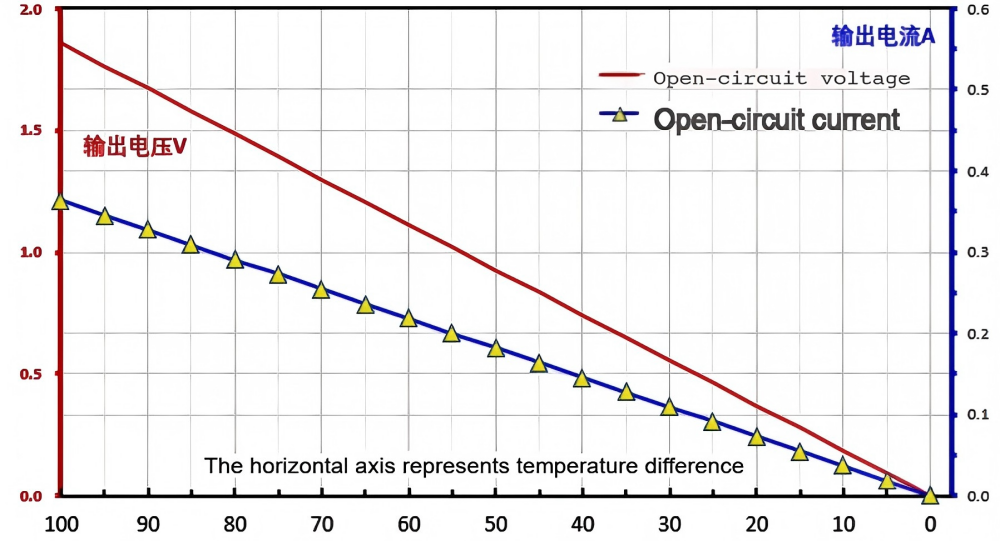
At a hot-end temperature of 200°C, the temperature-versus-output voltage and temperature-versus-output current curves
![]()
1. The horizontal axis of the graph represents the temperature difference—that is, the difference between the temperatures of the hot and cold surfaces. The greater the temperature difference, the higher the output voltage and current;
2. For the definitions of open-circuit voltage and open-circuit current, refer to P1. Both open-circuit voltage and open-circuit current can be measured with a multimeter when there is no load;
3. The left vertical axis represents voltage data, and the right vertical axis represents current data;













 Get A Free Quote