





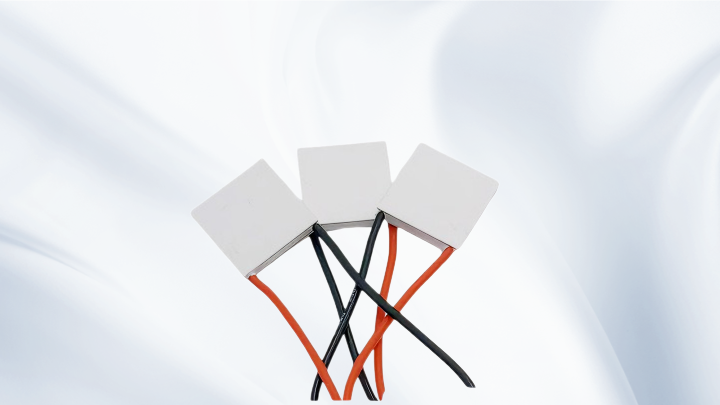
Why KKG Thermoelectric Coolers Are the Reliable Thermoelectric Cooler for Modern Applicationsthermoelectric cooler
Understanding Thermoelectric Cooling Technology
Thermoelectric coolers (TECs), also known as Peltier devices, use the Peltier effect to transfer heat from one side of the module to the other when an electric current is applied. This solid-state technology offers several advantages over traditional compressor-based cooling, including compact size, no moving parts, and precise temperature control. KKG has refined this technology to deliver high performance and long-term stability, making them a reliable thermoelectric cooler for demanding applications.
Key Features of KKG Thermoelectric Coolers
KKG's thermoelectric coolers are designed with several key features that ensure reliability and efficiency. First, they use high-quality bismuth telluride thermoelectric materials that provide excellent thermal conversion efficiency. Second, their modules are assembled with advanced soldering techniques to withstand thermal cycling and mechanical stress. Third, KKG offers a wide range of sizes and cooling capacities, from small spot coolers to high-power modules for industrial use. These features collectively make KKG a reliable thermoelectric cooler for applications where failure is not an option.
Applications Across Industries
KKG thermoelectric coolers are used in diverse fields such as medical devices (e.g., PCR machines and blood analyzers), telecommunications (cooling laser diodes and optical transceivers), automotive (seat cooling systems and battery thermal management), and consumer electronics (portable refrigerators and wine coolers). In each case, the ability to maintain stable temperatures, often within ±0.1°C, is crucial. For example, in medical diagnostics, a reliable thermoelectric cooler ensures that sensitive samples are kept at precise temperatures, preventing spoilage or inaccurate results.
Advantages Over Compressor-Based Cooling
Unlike compressor systems, KKG thermoelectric coolers offer silent operation, vibration-free performance, and environmental friendliness (no refrigerants). They are also easier to integrate into compact designs and can be powered by DC sources, making them ideal for portable and remote applications. The absence of moving parts reduces maintenance needs, further enhancing their reputation as a reliable thermoelectric cooler.
How to Choose the Right KKG Model
When selecting a KKG thermoelectric cooler, consider factors like heat load (how much heat needs to be removed), ambient temperature, size constraints, and power input. KKG provides detailed datasheets with performance curves to help engineers match modules to their needs. For optimal reliability, it's important to operate the module within its rated current and voltage, and to use proper heat sinks and thermal interface materials. By following these guidelines, you can ensure that your KKG cooler remains a reliable thermoelectric cooler over its lifetime.
Maintenance Tips for Longevity
Although TECs require minimal maintenance, a few practices can extend their lifespan. Keep the cold side clean to maximize heat absorption, and avoid condensation by using desiccants or conformal coatings in humid environments. Monitor the temperature delta between hot and cold sides—a large delta indicates reduced efficiency. Regularly check that the heat sink fins are not clogged with dust, which can impair performance. By following these tips, you can maintain your KKG thermoelectric cooler as a reliable thermoelectric cooler for years.
常见问题
With proper use, KKG modules can last over 200,000 hours of continuous operation, thanks to their robust construction and high-quality materials.
Yes, by reversing the polarity of the DC current, the heat flow direction reverses, allowing the same module to provide heating or cooling as needed.
Yes, a heat sink is essential to dissipate heat from the hot side; without it, the module can overheat and fail.
Absolutely, they contain no harmful refrigerants and are fully recyclable, aligning with green technology standards.What is the typical lifespan of a KKG thermoelectric cooler?Can KKG thermoelectric coolers be used for both cooling and heating?Do KKG modules require a heat sink?Are KKG thermoelectric coolers environmentally friendly?
