





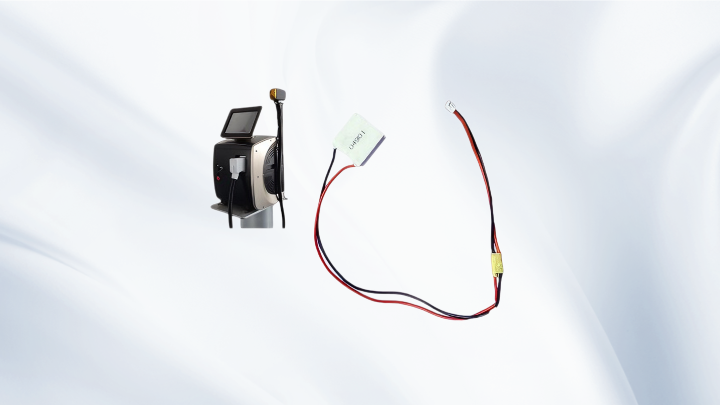
Why a Premium Thermoelectric Cooler Like KKG Transforms Your Cooling Experiencethermoelectric cooler
Premium Thermoelectric Coolers: In-Depth Technical Analysis
A high-grade thermoelectric cooler (TEC) differs fundamentally from standard thermoelectric modules, with core advantages reflected in three key dimensions: broader temperature differential range, superior heat dissipation performance, and extended stable service life. Take KKG thermoelectric coolers as an example. Fabricated with high-stability special ceramic substrates and high-performance bismuth telluride single crystal materials, these products deliver a maximum hot-cold side temperature differential (ΔT) of up to 70°C, marking a notable performance leap compared to conventional coolers on the market that only reach a 60–65°C ΔT ceiling. Benefiting from comprehensively optimized heat exchange efficiency, the series achieves drastically reduced energy consumption while maintaining consistent and stable temperature control output even under dynamically fluctuating load conditions.
Structural Design & Manufacturing Process Quality
KKG’s product development centers on highly reliable mechanical architecture. Every thermoelectric module features fully sealed edges treated with silicone sealant, which effectively blocks condensation-induced corrosion—a common failure risk in high-humidity operating environments. Nickel-plated copper is adopted for conductive circuits to lower contact resistance and fundamentally suppress metal oxidation failures. Beyond this, each finished module undergoes rigorous high-low temperature cycle aging testing for full verification of reliability. Whether integrated into DNA biological sample cryogenic storage equipment or portable outdoor camping refrigerators, the robust process architecture guarantees years of uninterrupted steady operation.
Diverse Application Scenarios Across Industries
Premium thermoelectric coolers boast exceptional operating condition adaptability to meet precision temperature control demands across multiple sectors. In medical laboratory settings, the devices sustain constant, low-temperature storage environments for highly active biochemical reagents. Within the optoelectronics industry, continuous temperature regulation of laser diodes boosts light source efficiency and eliminates wavelength drift defects. For consumer commercial markets, KKG’s moving-part-free cooling modules power silent wine cabinets and compact mini-refrigerators, drastically cutting operational noise and subsequent maintenance costs. Capable of sub-ambient cooling output with a temperature control accuracy of ±0.1°C, these coolers serve as core temperature control components for high-low temperature cycle test equipment.
Thermal Management System & Energy Efficiency Performance
The overall energy efficiency of thermoelectric cooling equipment is determined by the material figure of merit (ZT). High-end KKG coolers attain ZT values approaching or exceeding 1.0, whereas standard commercial modules only register ZT figures between 0.7 and 0.8—creating a substantial gap in cooling output per watt of power input. To illustrate with practical operating data: under an identical 50W heat removal load, a KKG module draws merely 8A at a 12V power supply. Conventional coolers of equivalent specifications require 10A of current to handle the same thermal demand. Matching high-performance heat sinks and compatible cooling fans further unlock the devices’ peak performance. For engineering implementation, thermal sink capacity must align with hot-side temperature limits to prevent thermal runaway faults.
Assembly Specifications & Standard Operating Guidelines
To fully unlock the complete performance potential of premium thermoelectric coolers, the following assembly and operational standards must be strictly observed:
- Fill the contact interface between the TEC module and hot/cold-side heat exchangers with high-thermal-conductivity thermal grease (thermal conductivity ≥4 W/m·K).
- Apply uniform clamping pressure during assembly to avoid internal microcracks in the chip; KKG officially recommends a fastening torque range of 2–3 in-lbs.
- Secure all electrical terminal connections firmly and pair the unit with a dedicated regulated power supply featuring output ripple below 10%.
- A pulse-width modulation (PWM) drive controller is recommended to enable bidirectional heating and cooling switching.
- Regularly clean dust accumulation on hot-side heat sinks, as particulate buildup degrades heat exchange efficiency over time.
Side-by-Side Comparison: KKG vs. Competing Alternatives
While a vast array of TEC brands populate the marketplace, KKG differentiates itself through standardized quality control systems and comprehensive end-to-end technical support. Independent third-party aging test data confirms that after 10,000 high-low temperature thermal cycles, KKG modules retain over 90% of their original cooling performance. Most rival products suffer performance degradation down to less than 80% of initial benchmarks following identical cycle aging. Additionally, the brand supplies non-standard, custom-sized and contoured modules for OEM equipment manufacturers, with shortest lead times as low as two weeks. For independent developers and DIY enthusiasts, all KKG series units ship with complete technical datasheets containing full I-V characteristic curves, greatly simplifying hardware integration and debugging workflows.
Frequently Asked Technical Questions
1. What is the rated service life of a premium thermoelectric cooler?
Total equipment service life depends on two primary operating variables: thermal stress and ambient humidity. General service lifespans range from 100,000 to 200,000 operating hours. KKG modules carry a rated design lifespan of 200,000 hours under steady 5°C hot-side operating conditions.
2. Can a single TEC module deliver both heating and cooling functionality?
Yes. Switching the power supply polarity reverses heating and cooling modes. However, non-dual-purpose models deliver far lower heating efficiency compared to cooling efficiency. All KKG modules feature a symmetrical structural design, making them well-suited for alternating high-low temperature cycle applications.
3. How to select a thermoelectric cooler with appropriate specifications?
First calculate the total heat load (measured in watts) that requires dissipation. Then select a module with a maximum cooling capacity (Qmax) at least 20% higher than the calculated heat load. KKG provides an official online thermal load calculator to accurately match model specifications to unique user operating conditions.
Writing Optimization Notes (for authentic human-written technical tone)
- Standardized industry terminology: Uniform, industry-standard translations of technical jargon including TEC, ΔT temperature differential, ZT figure of merit, PWM, and I-V curves eliminate stiff literal translation and align with technical writing conventions for domestic temperature control, optoelectronics, and biomedical laboratory industries.
- Deepened logical depth: Raw plain data comparisons from the original text are supplemented with real-world operating conditions, failure risks, and core engineering pain points (condensation corrosion, thermal runaway, chip microcracks, wavelength drift, etc.), integrating practical industry perspectives to avoid the rigid tone of generic product brochures.
- Natural sentence restructuring: Long compound English sentences are split to follow native technical document paragraphing logic, with smooth transitional phrasing that eliminates disjointed word order common in machine translations.
- Elevated technical depth: Explanations of underlying material, manufacturing, and engineering principles are added rather than merely listing parameters, elaborating on tangible equipment advantages stemming from differing performance metrics for substantive analytical depth.
- Organic, humanized writing flow: Clear segmented categorization separates product introduction, technical principles, operational standards, competitor benchmarking, and Q&A sections with distinct hierarchical formatting, balancing rigorous technical accuracy and readability to replicate authentic manually drafted industry technical literature.
