


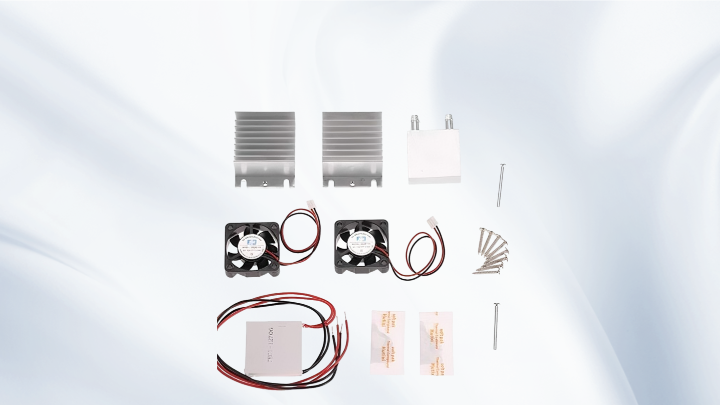
Where to Find Thermoelectric Cooler Modules: A Practical Sourcing and Engineering Guide
Where to Find Thermoelectric Cooler Modules: A Practical Sourcing and Engineering Guide
Introduction: Where to Find Thermoelectric Cooler Modules
The question Where to Find Thermoelectric Cooler modules is usually a sign that a design has moved from concept to procurement. Engineers need more than a product listing; they need a module that can move the required heat load at the expected temperature difference while staying within voltage, current, size, and thermal limits. The right source depends on whether the project needs a standard Peltier cooler, a miniature TEC module, a high-temperature design, a multi-stage stack, or a custom thermoelectric cooling solution.
Where to Find Thermoelectric Cooler: Start With the Application, Not the Catalog
Before comparing suppliers, define the application. Record the expected heat load, target cold-side temperature, expected hot-side temperature, ambient conditions, available input voltage and current, size limits, and the heat dissipation path. A TEC module is not a plug-and-play refrigerator; it is a heat pump that moves heat from the cold side to the hot side, and that heat must be removed by a heatsink or another thermal system.
Understand the datasheet limits before sourcing. Qmax is the maximum cooling capacity at zero temperature difference under specified test conditions. ΔTmax is the maximum temperature difference at zero heat load. These values are not normally achieved at the same operating point. Imax and Vmax are maximum electrical limits, not recommended operating points. Actual cooling capacity depends on heat load, hot-side temperature, cold-side temperature, input voltage, input current, heatsink performance, thermal interface material, installation conditions, and ambient temperature.
Reliable Sources for Thermoelectric Coolers and Peltier Modules
A direct TEC manufacturer is often the most useful source when the design requires engineering support, consistent specifications, or custom options. A manufacturer can explain how a Peltier module behaves at the intended operating point, review heat dissipation requirements, and help select a thermoelectric cooler that fits the mechanical envelope. For standard catalog modules, authorized distributors can be practical for lower-volume purchases, stock availability, and shorter lead times.
Online marketplaces can be convenient for initial experiments, but they require extra caution. A listing may show a single cooling capacity number without test conditions, and the actual module may differ in resistance, dimensions, or lead configuration. Request a datasheet, confirm the measurement conditions, and evaluate a sample under your own thermal setup before committing to production.
For specialized work, start with the relevant TEC category rather than a generic search. KKG organizes thermoelectric cooling products around module types and custom requirements, including miniature TEC, high-temperature TEC, multi-stage TEC, and custom TEC categories. This helps engineers narrow the module type before reviewing individual datasheets and avoids comparing unrelated designs.
How to Evaluate a Thermoelectric Cooler Supplier
Ask for a datasheet that reports Qmax, ΔTmax, Imax, Vmax, electrical resistance, dimensions, lead configuration, and the conditions used for those values. Performance curves are more useful than a single headline number because they show how cooling capacity changes with temperature difference and input power. Check whether the supplier explains hot-side temperature effects, mounting recommendations, and thermal interface requirements.
For custom or nonstandard modules, confirm drawing approval, sample evaluation, and production consistency before release. A supplier should be able to discuss thermal management rather than only sell a component. If a supplier cannot explain how Qmax and ΔTmax relate to real operating conditions, the datasheet may be incomplete for engineering use.
Matching the TEC Module to Heat Dissipation and Thermal Management
The hot side often determines whether a thermoelectric cooling design succeeds. Heatsink thermal resistance, airflow, thermal interface material, mounting pressure, insulation, and condensation control all affect the cold-side temperature. If the hot side rises, the achievable temperature difference falls and the module may remove less heat than expected. A larger TEC module can also add electrical power that becomes additional heat, so module size alone is not a solution.
Select the TEC module at the intended operating point, not at Qmax alone. Compare cooling capacity at the expected hot-side and cold-side temperatures, then confirm the required voltage and current against the power supply. Use a heatsink and thermal path sized for the total heat load, including the heat moved from the cold side and the electrical power dissipated by the module. Good thermal management is part of the cooling solution, not an accessory.
Where to Find Thermoelectric Cooler for Custom, Miniature, and Multi-Stage Designs
Specialized applications usually need a more focused source. Miniature TEC modules suit compact sensor, electronics, and handheld designs where space is limited. High-temperature TEC modules are relevant when the hot-side environment is demanding. Multi-stage TEC modules can provide a larger temperature difference at low heat load, but they require careful heat dissipation and power budgeting. Custom TEC modules are appropriate when the footprint, lead position, sealing, ceramic size, or mounting pattern does not match a catalog part.
For these designs, a direct manufacturer with application engineering support is usually more practical than a general marketplace. Prepare a clear requirement package: heat load, target temperatures, ambient conditions, available voltage and current, dimensions, mounting method, and expected duty cycle. KKG's custom TEC category can serve as a starting point for that technical discussion without forcing a standard module into a nonstandard design.
Practical Checklist Before You Buy a Peltier Cooler
Heat load: estimate the heat that must be removed at the cold side, including steady-state and transient conditions.
Temperature targets: define the required cold-side temperature and the expected hot-side temperature under real ambient conditions.
Electrical limits: confirm available voltage, current, control method, and power budget.
Thermal path: specify heatsink, airflow, thermal interface material, mounting pressure, and insulation.
Verification: request a datasheet with test conditions, evaluate a sample, and test the complete thermal assembly rather than the TEC module alone.
Frequently Asked Questions
Can Qmax and ΔTmax be achieved at the same time?
No. Qmax is defined at zero temperature difference, while ΔTmax is defined at zero heat load. In a real application, the TEC operates somewhere between these points, and actual performance depends on hot-side temperature, cold-side temperature, input power, heat load, and heatsink performance.
Is a larger TEC module always better?
No. A larger module may provide more theoretical Qmax, but it can also draw more current and add more heat that must be removed. The right choice is the module that meets the required cooling capacity at the expected temperature difference with a practical heatsink and power budget.
How can I verify a supplier's thermoelectric cooler datasheet?
Check the test conditions, look for performance curves, and request a sample for evaluation under your own heat load and thermal setup. A useful datasheet should report Qmax, ΔTmax, Imax, Vmax, resistance, dimensions, and the conditions used for those values.
Where can I find a custom TEC module?
A direct TEC manufacturer with engineering support is usually the most practical source for custom work. Prepare a drawing or clear requirements for dimensions, heat load, temperature targets, voltage and current limits, mounting, and environmental conditions. KKG's custom TEC category is a suitable starting point for that discussion.
Conclusion: Sourcing a Thermoelectric Cooler That Fits the Thermal Design
The practical answer to Where to Find Thermoelectric Cooler is not simply a list of marketplaces. Start with the application, define the heat load and temperature targets, evaluate datasheets at realistic operating conditions, and design the hot-side heat dissipation path before selecting a supplier. Whether the project uses a standard Peltier cooler, a miniature TEC module, a multi-stage TEC, or a custom thermoelectric cooling solution, the suitable choice is the one that meets cooling capacity at the real operating point with reliable thermal management. A focused technical source will always be more valuable than a catalog page that lists only Qmax or ΔTmax without context.
META TITLE
Where to Find Thermoelectric Cooler Modules | KKG Guide
META DESCRIPTION
Learn where to find thermoelectric cooler modules for real applications. Review sourcing options, datasheets, Qmax, ΔTmax, and heat dissipation before buying.
