





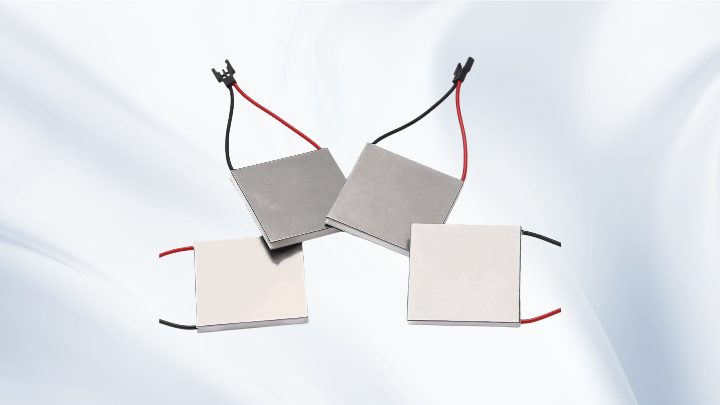
Unlocking Advanced Cooling: The Premium TEC Cooler Revolutionthermoelectric cooler
Understanding Thermoelectric Cooling Technology
Thermoelectric coolers, or TECs, operate on the Peltier effect, where an electric current passes through two dissimilar conductors, creating a heat flux. This allows one side to cool while the other heats up. A Premium TEC Cooler leverages advanced materials and manufacturing to maximize this effect, offering precise temperature control down to fractions of a degree. Unlike traditional compressor-based systems, TECs have no moving parts, reducing maintenance and noise. This makes them ideal for applications where reliability and compactness are critical.
Why Choose a Premium TEC Cooler Over Standard Options
Standard TECs may suffice for basic tasks, but a Premium TEC Cooler delivers superior performance. Key differences include higher thermal conductivity substrates, such as aluminum nitride or beryllium oxide, which improve heat transfer. Premium models also feature advanced thermoelectric materials like bismuth telluride alloys with optimized doping for higher coefficient of performance (COP). Additionally, they undergo rigorous quality control, including burn-in testing and thermal cycling, ensuring long-term stability. For demanding applications like laser diode cooling or PCR thermal cyclers, a standard TEC may introduce temperature fluctuations that compromise results, while a premium unit maintains steady-state conditions.
Key Applications of Premium TEC Coolers
Premium TEC coolers excel in medical diagnostics, where precise temperature control is vital for DNA amplification and blood analyzers. In telecommunications, they cool laser modules to maintain wavelength stability. Industrial automation uses them for thermal management of sensors and enclosures. For consumer electronics, high-end projectors and CPU coolers benefit from premium TECs for silent, efficient heat removal. Notably, the automotive industry leverages premium TECs for battery thermal management and seat cooling systems, where reliability under vibration is paramount. The market growth for premium TECs is driven by the miniaturization of electronics and the need for energy-efficient cooling in data centers.
Factors to Consider When Selecting a Premium TEC Cooler
Choosing the right premium TEC involves evaluating size and footprint, cooling capacity (Qmax), and maximum temperature difference (ΔTmax). Premium coolers often provide higher Qmax per unit area due to better materials. Ensure compatibility with your heat sink and fan assembly because a high-performance TEC requires efficient heat rejection. Check electrical ratings: voltage, current, and AC resistance. For precise control, consider PID controllers that adjust power based on feedback. Also, examine the thermal interface material (TIM) used; premium models may include pre-applied phase-change pads. Finally, evaluate the lifetime at your operating conditions—premium TECs typically have MTBF over 200,000 hours.
Installation and Best Practices
Proper installation is crucial for premium TEC performance. Mount the TEC between the heat source (cold side) and heat sink (hot side). Apply a thin, even layer of thermal paste or use a pad. Avoid overtightening screws, which can crack the ceramic plates. Ensure the hot side fan has adequate airflow; without it, the TEC can overheat and fail. For cold side condensation management, insulate the cold surface to prevent moisture damage. Always operate within the specified voltage and current; exceeding limits causes rapid degradation. Use a dedicated power supply with low ripple, and consider a soft-start circuit to avoid thermal shock. For multi-stage systems, ensure proper heat sinking between stages.
Common Myths About Thermoelectric Coolers
Many believe TECs are inefficient, but a Premium TEC Cooler can achieve COP over 1.0 at small temperature differences—comparable to miniature vapor-compression systems. Another myth is that TECs are unreliable, but premium units undergo stringent testing. Some think they are only for small cooling loads, yet multi-stage modules can handle dozens of watts. Finally, the idea that TECs always require complex controllers is false; simple on-off control works for many applications.
Future Trends in Premium TEC Cooling
The industry is moving toward flexible thermoelectric films and integrated photonic devices. Premium TECs are becoming more affordable as manufacturing scales. Research into lead-free thermoelectric materials will drive eco-friendly cooling. Additionally, rapid thermal cycling capabilities open new applications in portable refrigeration and electronic testing. The integration of machine learning for predictive thermal management will further enhance efficiency.
Common Questions
How does a Premium TEC Cooler differ from a standard one?
Premium TECs use higher-grade thermoelectric materials, better ceramics, and tighter quality control. They offer higher cooling density, longer lifespan, and more precise temperature control.
Can I use a Premium TEC Cooler for outdoor applications?
Yes, but ensure it has proper environmental sealing (e.g., epoxy coating) to protect against moisture and dust. Also, consider the ambient temperature range in the datasheet.
What size power supply do I need?
Choose a supply that matches the TEC's rated voltage and current, plus a 20% margin. For example, a 12V, 6A TEC needs a supply that delivers at least 12V and 7.2A.
