





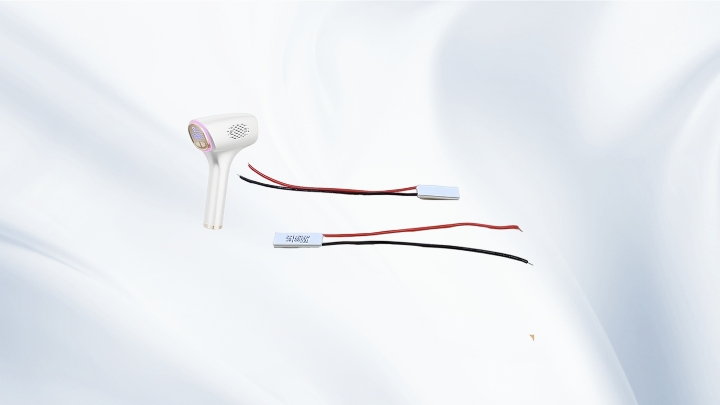
Thermoelectric Cooler Selection Guide: How to Choose the Right TEC Module
🔶 What Is a Thermoelectric Cooler / TEC Module?
A thermoelectric cooler (TEC), also known as a Peltier cooler or thermoelectric cooling module, is a solid-state cooling device that uses the Peltier effect to transfer heat from one side of the module to the other. Unlike compressor-based refrigeration systems, a TEC module has no moving mechanical parts or refrigerant, making it suitable for compact and precisely controlled cooling applications.
Thermoelectric coolers are used in electronics cooling, optical communication, medical equipment, industrial instruments, automotive electronics, portable cooling systems, and other applications where localized temperature control is required. KKG provides TEC solutions in different sizes, structures, materials, and configurations, including single-stage and multi-stage thermoelectric coolers.
However, choosing a TEC module should not be based on one specification alone.
A common mistake is to ask, “How many watts can this TEC cool?” and then select the module with the largest Qmax value. In practice, TEC performance depends on the cooling load, temperature difference, hot-side temperature, operating current, voltage, and heat dissipation system.
That is why a proper thermoelectric cooler selection should consider the complete thermal system rather than a single specification.
How to Choose a Thermoelectric Cooler
🔶 Determine the Required Cooling Capacity
The first step is to determine how much heat the TEC needs to remove from the cold side.
The required cooling capacity, Qc, depends on the actual heat load of the object being cooled. This may include heat generated by electronic components, heat entering from the surrounding environment, and heat transferred through the mechanical structure.
The Qmax value shown on a TEC datasheet represents the maximum heat pumping capacity under specified test conditions. It does not mean that the module will continuously provide Qmax in every application.
For example, a TEC rated with a high Qmax may not provide the same cooling capacity when the hot-side temperature increases or when a large temperature difference is required.
Another important parameter is ΔTmax.
ΔTmax is the maximum temperature difference that a TEC can theoretically achieve between its cold and hot sides under specified conditions. It is not the temperature difference that the TEC will necessarily maintain during normal operation.
As the cooling load increases, the achievable temperature difference generally decreases. Therefore, both Qc and ΔT should be considered when selecting a thermoelectric cooler.
🔶 Check Voltage and Current
A TEC should not be selected simply by asking, “How many watts is this TEC?”
Electrical requirements are equally important.
The operating voltage and current determine how much electrical power the TEC consumes:
P = V × I
For example, a TEC operating at 12 V and 5 A consumes approximately 60 W of electrical power.
The available power supply must therefore be capable of providing the required voltage and current continuously. The power supply, wiring, connectors, controller, and protection components should all be considered as part of the system design.
It is also important to distinguish between a TEC's rated operating conditions and the maximum values listed on a datasheet. Running a module continuously at excessive current may increase heat generation and reduce reliability.
For applications requiring precise temperature control, a suitable TEC controller can also regulate current or power according to the actual temperature feedback.
🔶 Consider Hot-Side Heat Dissipation
This is one of the most important factors in thermoelectric cooling—and one that is often overlooked.
Many users focus only on the cold side and ask whether the TEC can reach the required temperature. However, the hot side must continuously remove both the heat absorbed from the cold side and the electrical power consumed by the TEC.
The basic heat balance can be expressed as:
Qh = Qc + P
Where:
- Qh = heat that must be removed from the hot side
- Qc = heat absorbed from the cold side
- P = electrical power consumed by the TEC
This means that if a TEC absorbs 40 W of heat from the cold side and consumes 60 W of electrical power, the hot-side cooling system must remove approximately 100 W of heat.
This is why the heatsink, fan, water-cooling system, cold plate, thermal interface material, and mounting pressure can have a major influence on actual TEC performance.
A powerful TEC with insufficient hot-side heat dissipation may actually provide poor cold-side performance because the hot-side temperature rises too high.
KKG's thermoelectric cooling solutions can be combined with appropriate thermal management designs depending on the application, including compact cooling systems and customized configurations.
Choosing a TEC for Different Applications
Different applications require different TEC characteristics.
For a compact electronic device, the priority may be small dimensions, low power consumption, and precise temperature control.
For optical or laser applications, temperature stability and accurate thermal control may be more important than maximum cooling capacity.
For portable cooling equipment, voltage compatibility, efficiency, size, and heat dissipation may become the key considerations.
For industrial equipment, the required operating temperature range, continuous operating conditions, reliability, and customized mechanical dimensions may be more important.
KKG's product range includes different TEC sizes and structures, from micro thermoelectric coolers to larger modules, as well as single-stage and multi-stage configurations.
Therefore, there is no single “best” thermoelectric cooler for every application. The right TEC is the one that matches the actual thermal and electrical requirements of the system.
What Information Do You Need to Select a TEC?
If you are not sure which thermoelectric cooler is suitable for your application, providing the following information can help engineers evaluate the appropriate TEC solution:
- Target cold-side temperature
- Ambient temperature
- Hot-side temperature
- Heat load
- Required cooling capacity
- Available voltage
- Maximum current
- Available installation space
- Required TEC dimensions
- Application environment
The more complete the application information is, the more accurately the TEC can be selected.
For example, simply requesting a “40 × 40 mm, 12 V TEC” may not be enough to determine whether a module can achieve the required cooling performance. The actual heat load, target temperature, hot-side conditions, and available power supply are also necessary.
🔶 Conclusion
Selecting a thermoelectric cooler is not simply a matter of choosing the TEC with the highest Qmax or the largest electrical power rating.
A suitable TEC should be evaluated based on cooling capacity (Qc), Qmax, ΔTmax, voltage, current, hot-side heat dissipation, operating temperature, physical dimensions, and the actual application environment.
Most importantly, the TEC should be considered together with the complete thermal management system. Proper hot-side heat dissipation is essential because the heatsink must remove both the heat pumped from the cold side and the electrical power generated by the TEC.
If you are not sure which thermoelectric cooler is suitable for your application, provide these parameters to KKG and our engineers can help evaluate a suitable TEC solution.
