





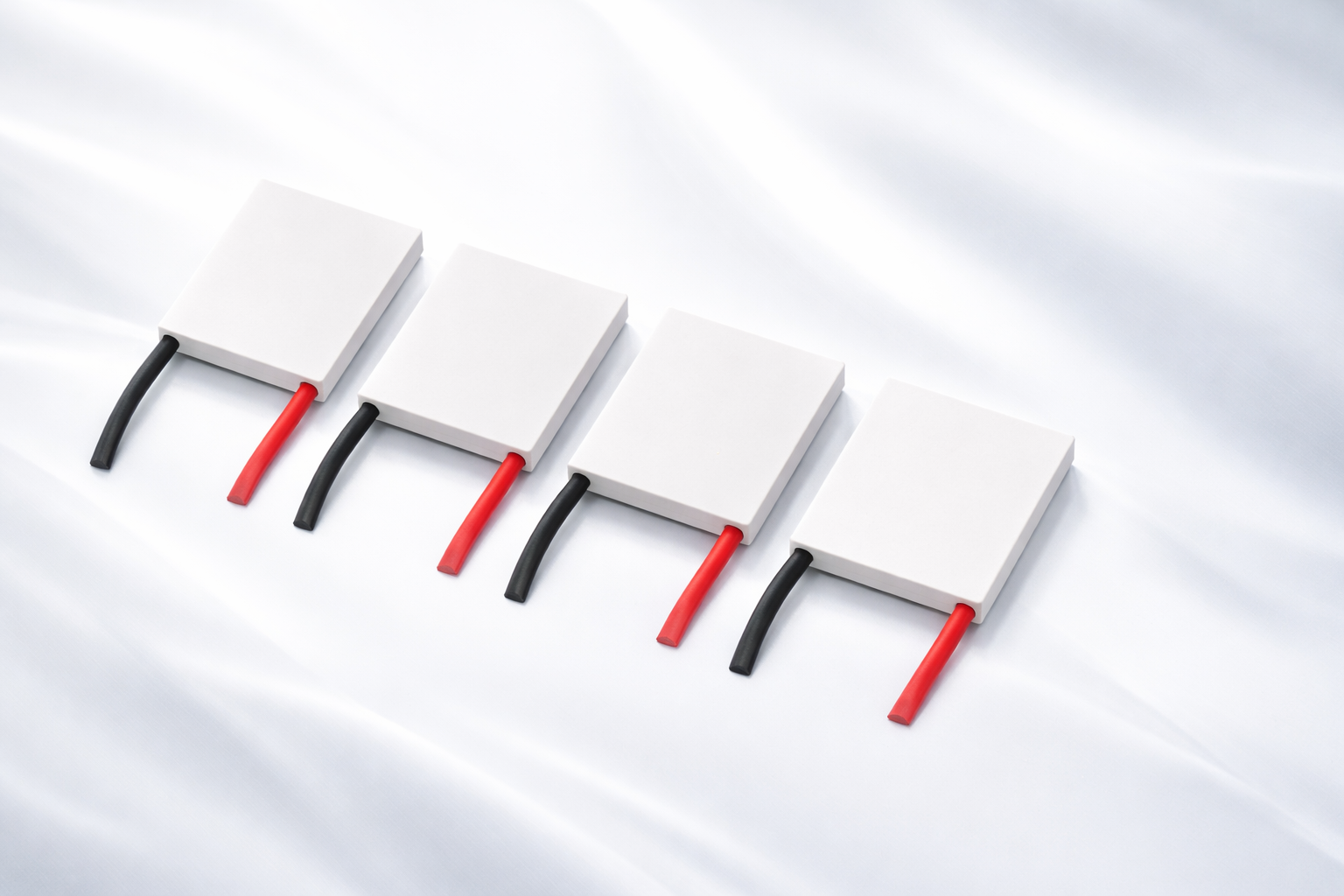
Thermoelectric Coolers: A Comprehensive Guide and the Importance of Choosing an Original Manufacturerthermoelectric cooler
Understanding Thermoelectric Coolers
A thermoelectric cooler operates on the Peltier effect: when a direct current flows through two dissimilar semiconductors, it creates a temperature difference, causing one side to absorb heat and the other to dissipate it. This allows for both cooling and heating by reversing the current polarity. TECs have no moving parts, making them highly reliable, quiet, and maintenance-free. They are an excellent choice for applications requiring precise temperature control, compact size, and low weight.
Key Applications of TEC Coolers
TECs find use across various industries:
Medical and Laboratory: They are used in PCR cyclers, medical imaging equipment, and cold storage for samples, where precise temperature stability is essential.
Telecommunications: Laser diodes and optical transceivers in fiber-optic networks rely on TECs to maintain optimal operating temperatures, ensuring signal integrity and long lifespan.
Consumer Electronics: Miniature TECs are used in portable refrigerators, wine coolers, and CPU coolers for high-performance computers, offering silent and vibration-free operation.
Automotive: Heated and cooled seats in luxury vehicles use TECs to enhance passenger comfort.
Industrial: TECs cool control cabinets, sensors, and cameras in harsh environments where refrigerant-based cooling is impractical.
Why Choose an Original TEC Cooler Manufacturer?
When sourcing TECs, the choice of manufacturer is critically important. Original manufacturers invest in advanced materials, precise manufacturing processes, and rigorous quality control, resulting in higher coefficient of performance (COP) and longer mean time between failures (MTBF). They can provide detailed specifications, including thermal resistance, current-voltage curves, and reliability data, which are essential for optimal system design. They also offer customization options, such as form factor, lead length, and dielectric strength, to meet unique requirements.
Selecting a non-original or counterfeit product can lead to significant issues: lower cooling capacity, inconsistent performance, premature failure, and potential safety hazards. A genuine manufacturer ensures traceability of materials and adherence to international standards like RoHS and REACH.
Factors to Consider When Selecting a TEC
Several technical parameters must be evaluated:
Heat Pumping Capacity (Qmax): The maximum amount of heat the TEC can move when the temperature difference (ΔT) is zero. Determine your actual heat load, including active heat generation and passive thermal gain.
Maximum Temperature Difference (ΔTmax): The highest temperature differential achievable when no heat load is applied. Ensure the TEC can maintain the desired ΔT under your operating conditions.
Electrical Characteristics: Operating voltage and current influence the required power supply and controller design. Efficiency is often expressed as COP, which varies with ΔT.
Geometry and Mounting: Size, shape, and mounting surface affect the thermal interface and mechanical integration. Consider the thermal resistance of the hot side heatsink and cold side cold plate.
Reliability and Lifespan: TECs have a typical lifespan of over 100,000 hours when operated within specified limits. However, thermal cycling can cause mechanical stress due to coefficient of thermal expansion differences. Choose a TEC with robust construction and appropriate solder points.
Working with a Trusted Partner
Reputable TEC cooler original manufacturers offer more than just products. They provide engineering support, from thermal simulation to prototyping, helping you optimize the entire thermal management system. They can also assist with integration challenges, such as choosing the right heatsink, fan, and control algorithm.
For example, a medical device manufacturer may require a TEC with very low electromagnetic interference (EMI) and high biocompatibility. An original manufacturer can adjust materials and production methods to meet these standards. They also ensure consistent quality through batch-to-batch monitoring and certification, which is vital for products that must pass FDA or ISO regulations.
Future Trends in Thermoelectric Cooling
The field is evolving with the development of thin-film TECs for rapid thermal cycling and high heat flux applications, and flexible TECs for wearable devices. Research is also focusing on improving efficiency by using advanced thermoelectric materials like bismuth telluride alloys and skutterudites. As the demand for miniaturization and precise temperature control grows, the role of TECs will expand, making partnership with an original manufacturer increasingly valuable.
常见问题
How long do TEC coolers last?
A TEC cooler's lifespan typically exceeds 100,000 hours if operated within rated current and temperature limits. However, constant thermal cycling can reduce longevity due to mechanical fatigue. Choosing a high-quality original manufacturer ensures sturdy construction and reliability.
Can TECs achieve sub-zero temperatures?
Yes, single-stage TECs can achieve temperature differences up to about 70°C for a hot side temperature of 25°C. For colder temperatures, multi-stage TECs can reach -100°C or lower, but with reduced efficiency.
How do I control the temperature precisely?
Precise control is achieved by using a PID controller or a simple thermostat circuit that adjusts the current through the TEC based on feedback from a temperature sensor. Advanced controllers use PWM for better efficiency.
Are TECs environmentally friendly?
Yes, TECs do not use refrigerants or any moving parts, making them environmentally safe. They are also compact and long-lasting, reducing waste.
