


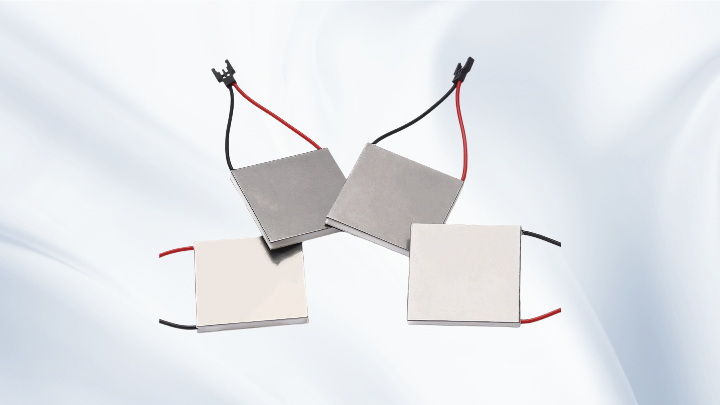
Thermoelectric Cooler Original Manufacturer: A Practical Guide to TEC Selection and Custom Design
Thermoelectric Cooler Original Manufacturer: A Practical Guide to TEC Selection and Custom Design
Selecting a thermoelectric cooler is rarely just a matter of picking a module from a catalog. The module must match the heat load, the available power, the ambient conditions, and the mechanical envelope. Working with a Thermoelectric Cooler Original Manufacturer early in the design cycle helps engineering teams avoid the common mismatch between datasheet values and real operating performance. This guide explains what an original TEC manufacturer does, how to interpret Qmax and ΔTmax, and how to evaluate a Peltier cooler for practical thermal management.
What an Original TEC Manufacturer Actually Does
An original manufacturer designs and builds thermoelectric modules rather than simply reselling them. That distinction matters because a TEC module is a semiconductor cooling device whose performance depends on pellet geometry, material selection, solder systems, ceramic substrates, and process control. A Peltier module from an original manufacturer is typically supported by engineering data, thermal analysis, and the ability to customize dimensions, lead wires, sealing, and mounting features.
For buyers, the practical difference appears when the application is not standard. Miniature TEC modules for medical instruments, high-temperature TEC modules for industrial environments, multi-stage TEC modules for low-temperature applications, and custom Peltier coolers all require design review rather than a catalog lookup. A Thermoelectric Cooler Original Manufacturer can discuss trade-offs in cooling capacity, power consumption, and mechanical fit before tooling or production begins.
Matching TEC Specifications to Your Heat Load
The first step in TEC selection is defining the heat load. This includes the active load from electronics, the passive load through insulation, and any heat leaked through seals, fasteners, or cables. If the heat load is underestimated, the cold side will not reach the target temperature. If it is overestimated, the module may be oversized, increasing power consumption and heatsink requirements.
Datasheets usually list Qmax, ΔTmax, Imax, and Vmax. These values describe boundary conditions, not a single operating point. Qmax is the maximum cooling capacity at zero temperature difference. ΔTmax is the maximum temperature difference at zero heat load. In normal operation, the TEC module delivers less cooling capacity as the temperature difference between the cold side and hot side increases.
Qmax and ΔTmax Are Not Simultaneous
A common mistake is to assume that a module rated for a certain Qmax can also maintain ΔTmax while pumping that heat load. In practice, Qmax and ΔTmax cannot normally be achieved under the same operating condition. Qmax occurs when the cold side and hot side are at the same temperature, which is not a useful cooling state. ΔTmax occurs when no heat is being pumped, which is not a useful load condition. Real performance sits somewhere between these limits and depends on hot-side temperature, cold-side temperature, input voltage, input current, and heatsink performance.
Voltage, Current, and Power Consumption
Imax and Vmax define electrical limits and reference conditions. They should not be treated as the recommended operating point for every design. The actual voltage across a TEC module depends on current and temperature difference, and the electrical resistance changes with operating temperature. Power consumption is the product of module voltage and current, plus the heat rejected on the hot side. A Peltier cooler that looks efficient on paper can become a poor choice if the hot side cannot be held close to ambient.
For battery-powered or thermally constrained systems, it is often better to select a TEC module with a lower current and a larger area than to drive a small module at high current. This reduces Joule heating and spreads the heat load across the ceramic surface. The right balance depends on the application, so the Thermoelectric Cooler Original Manufacturer should review the heat load, target temperature difference, and available power together.
Thermal Management Beyond the TEC Module
The TEC module is only one part of the thermal path. The hot side must reject both the pumped heat and the electrical power used by the module. If the heatsink has high thermal resistance, the hot side will rise, the temperature difference will shrink, and the module will draw more current for less cooling. In severe cases, the hot side can exceed the module limit and reduce reliability.
Cold-side design is equally important. Thermal interface material, mounting pressure, surface flatness, and insulation all affect the cold-side temperature. A thin, uniform bond line with a suitable thermal interface material often matters more than a small increase in Qmax. The enclosure should also limit moisture migration and condensation, especially in applications that operate below dew point.
Good thermoelectric cooling design therefore treats the Peltier module, heatsink, fan, insulation, and control electronics as one system. The manufacturer can provide module data, but the system integrator must validate the complete thermal path under real ambient conditions.
When to Choose a Custom Thermoelectric Cooler Original Manufacturer
Standard TEC modules cover many applications, but custom modules become useful when the mechanical envelope is tight, the operating temperature is elevated, or the thermal load is unusual. A custom Peltier cooler can include a specific ceramic size, pellet pattern, lead configuration, sealing method, or mounting interface. Multi-stage TEC modules may be appropriate when a single-stage module cannot reach the required temperature difference, though they add complexity and cost.
Miniature TEC modules are common in optical, medical, and sensor applications where the heat load is small but stability is critical. High-temperature TEC modules are used when the hot side must operate above standard limits or when the ambient temperature is high. In each case, the Thermoelectric Cooler Original Manufacturer should confirm the material system, solder, and sealing before production. A manufacturer such as KKG can review these variables and propose a module format that fits the application rather than forcing the design around a catalog part.
Working with a Thermoelectric Cooler Original Manufacturer: Practical Steps
Start with a clear requirement set: heat load at the target temperature, cold-side set point, hot-side temperature or ambient, available voltage and current, duty cycle, mechanical envelope, and expected lifetime. Include any constraints on noise, condensation, orientation, and control method. This information lets the manufacturer recommend a TEC module and flag thermal risks early.
Next, ask for a design review rather than only a datasheet. The review should cover Qmax, ΔTmax, Imax, Vmax, expected power consumption, and the assumed heatsink thermal resistance. If the hot-side temperature is not fixed, ask for performance at several hot-side conditions. This is more useful than a single point estimate because real systems rarely operate at a constant 25°C hot side.
Finally, validate a prototype under representative conditions. Measure cold-side temperature, hot-side temperature, input power, and stabilization time. If performance falls short, check the thermal interface material, heatsink contact, insulation, and airflow before changing the module. Many apparent TEC failures are actually system-level thermal problems.
Frequently Asked Questions
Can Qmax and ΔTmax be achieved at the same time?
No. Qmax is the cooling capacity at zero temperature difference, while ΔTmax is the temperature difference at zero heat load. A real application operates between these limits, so the actual cooling capacity depends on the heat load, hot-side temperature, cold-side temperature, and input power.
Why does my Peltier cooler perform worse than the datasheet?
The datasheet usually assumes a controlled hot-side temperature and an ideal thermal path. In a real system, heatsink thermal resistance, thermal interface material, airflow, insulation losses, and ambient temperature can reduce performance. Check the hot-side temperature first, then review the cold-side mounting and heat load.
Is a higher Qmax always better?
Not necessarily. A higher Qmax module may require more current and a larger heatsink. If the hot side cannot reject the extra heat, the temperature difference will collapse. Selection should balance cooling capacity, power consumption, module size, and thermal management.
What information should I provide to a Thermoelectric Cooler Original Manufacturer?
Provide the heat load, target cold-side temperature, expected hot-side temperature or ambient, available voltage and current, duty cycle, mechanical dimensions, and any sealing or reliability requirements. A simple sketch of the thermal path and a description of the control method also help.
Conclusion
Choosing a TEC module is a system-level engineering task. Qmax and ΔTmax are useful reference values, but they do not describe a single operating point. Real performance depends on heat load, hot-side temperature, cold-side temperature, voltage, current, thermal resistance, and installation quality. A Thermoelectric Cooler Original Manufacturer can add value by reviewing these variables, recommending a suitable Peltier cooler, and supporting custom designs when standard modules do not fit. For any application where temperature stability, size, or reliability matters, selecting the right TEC solution early is more effective than correcting thermal problems after the design is built.
Meta Title: Thermoelectric Cooler Original Manufacturer | TEC Guide
Meta Description: Learn how to evaluate a Thermoelectric Cooler Original Manufacturer, match Qmax, ΔTmax, voltage, and current to your heat load, and design reliable TEC cooling.
