





Thermoelectric Cooler Brand Selection: A Practical Engineering Guide
When engineers begin searching for a thermoelectric cooler brand, they often assume that all Peltier modules are fundamentally similar. However, a reliable Thermoelectric Cooler Brand must be evaluated on its ability to deliver consistent performance, robust construction, and practical thermal design support. This article provides a technical guide to selecting a TEC module supplier that can meet the demands of your specific application.
Understanding Thermoelectric Coolers and Key Performance Parameters
Thermoelectric coolers (TECs) are solid-state heat pumps that operate on the Peltier effect. A Peltier cooler uses semiconductor p- and n-type elements to transfer heat from one side of the module to the other when a DC current is applied. These devices are also called TEC modules or Peltier modules, and they are widely used for precision thermal management because they offer compact size, silent operation, and accurate temperature control.
To compare products from different suppliers, engineers must first understand the fundamental specifications of a thermoelectric cooler:
Qmax is the maximum cooling capacity of the TEC, expressed in watts, when the module is operated at its maximum current and voltage with the hot side held at a specified reference temperature. ΔTmax is the maximum temperature difference the TEC can produce between the hot side and cold side when the heat load is zero. It is essential to understand that Qmax and ΔTmax cannot be achieved at the same time. Actual cooling capacity decreases as the temperature difference across the module increases.
Other important ratings include Imax, Vmax, and electrical resistance. These define the module's maximum operating point, but a TEC is rarely operated at its maximum ratings in a real system. Instead, the module is usually driven at a current that balances cooling capacity with power consumption and efficiency.
Thermoelectric Cooler Brand Evaluation Criteria
When you evaluate a new Thermoelectric Cooler Brand, do not focus only on the datasheet values. The suppliers must be judged on their engineering capability and the technical support they offer. Here are the key criteria to consider:
Application knowledge: A competent thermoelectric cooler manufacturer will ask about your heat load, required cold-side temperature, hot-side temperature, ambient environment, and available power supply before recommending a module. If a supplier treats every inquiry as a simple purchase order, that is a warning sign.
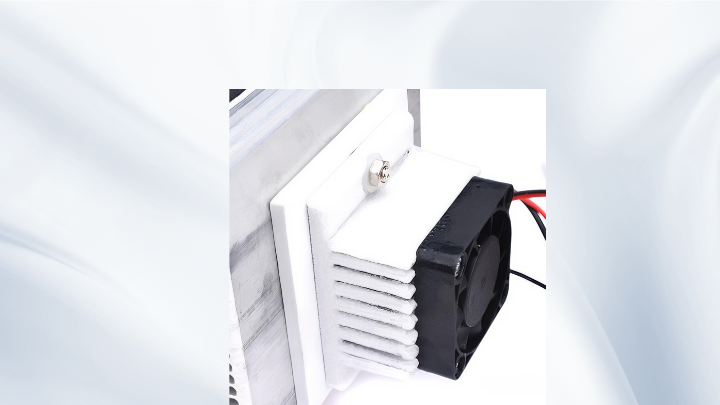
Thermal design support: A suitable Peltier cooler cannot work without an effective heat dissipation system. A good supplier should provide guidance on heatsinks, fans, thermal interface materials (TIMs), insulation, and mounting pressure. They should also help you calculate the true cooling capacity for your application rather than relying only on Qmax.
Quality and manufacturing consistency: The reliability of a thermoelectric cooler depends heavily on soldering quality, ceramic substrate flatness, and protection against moisture. A professional TEC module manufacturer will have strict process controls, electrical testing, and perhaps thermal cycling tests. Ask about qualification data, manufacturing tolerances, and how modules are inspected before shipment.
Customization capabilities: Standard catalog TECs may not fit every application. A strong Thermoelectric Cooler Brand should be able to offer custom designs such as multi-stage modules, miniature TEC modules, high-temperature TECs, or special lead configurations. This is especially important in industries such as medical devices, automotive LiDAR, aerospace, and scientific instrumentation.
The Role of Hot-Side Heat Dissipation in TEC Performance
One of the most common mistakes in thermoelectric cooling is selecting a TEC module without paying enough attention to the hot-side heatsink. The thermal resistance of the heatsink determines the hot-side temperature, which directly influences the effective temperature difference and cooling capacity. If the hot side is not kept sufficiently cool, the module cannot pump heat away from the cold side efficiently.
For example, if your target cold-side temperature is 5 °C and the ambient temperature is 35 °C, the TEC must work against a temperature difference of at least 30 °C, plus any rise in hot-side temperature caused by heatsink thermal resistance. Two identical thermoelectric coolers can perform very differently in different systems simply because the thermal management on the hot side is not the same.
The thermal interface between the TEC and the heatsink is also critical. Use a high-quality thermal grease, phase-change material, or other thermal interface material with low thermal resistance. Apply even, moderate pressure to avoid cracking the ceramic substrates and to ensure full-surface contact. Uneven mounting pressure creates local hot spots and reduces the reliability of the semiconductor cooling device.
Application-Driven Selection: Matching the TEC to Your Heat Load
Selecting a thermoelectric cooler for a real application begins by defining the heat load precisely. There are two categories of heat loads: active loads and passive loads. Active heat load is the heat generated by the device being cooled, such as an electronic chip, laser diode, or battery pack. Passive heat load includes heat leaking into the system through insulation, conduction through wires, radiation, and convection.
Once the total heat load is known, you must specify the required cold-side temperature and the maximum acceptable hot-side temperature. This determines the required temperature difference (ΔT) across the module. The next step is to select a Peltier module that provides enough cooling capacity at that specific ΔT, not just at Qmax. For many applications, engineers choose a TEC with a Qmax that is 20% to 50% higher than the calculated heat load to provide a safety margin.
Power consumption is another important constraint. A thermoelectric cooler is not always the most efficient cooling method compared to vapor-compression systems, but its precision temperature control and compact package make it valuable for specialized thermal management tasks. The input voltage and current must match the available power source, and the total power budget should be verified before final selection.
Single-stage versus multi-stage TECs
For moderate temperature differences, a single-stage thermoelectric cooler is sufficient. When a very large ΔT is required, such as in infrared detectors or scientific cameras, a multi-stage TEC module can be used to multiply the temperature difference. However, multi-stage modules have lower coefficient of performance (COP) and require even better heat dissipation on the hot side.
Quality and Reliability Considerations for a Thermoelectric Cooler Brand
Thermoelectric coolers are solid-state devices with no moving parts, but they can still fail because of thermal stress, moisture ingress, or solder fatigue. A reputable thermoelectric cooler brand will emphasize robust assembly techniques, such as hermetic sealing or conformal coating, to extend the lifetime of the module in harsh environments.
When discussing reliability with a potential supplier, ask about their experience with temperature cycling, high humidity, and thermal shock. A manufacturer with extensive qualification testing in these areas will be more likely to provide a TEC that matches your application expectations. Consistent batch-to-batch performance is also vital for products that move from prototype to mass production.
Beyond the module itself, a strong Thermoelectric Cooler Brand should offer responsive technical communication, complete datasheets, and application notes. They should also be ready to collaborate with your engineering team on system-level challenges like heat exchanger selection, insulation, or control algorithms. This level of cooperation can save months of development time.
Frequently Asked Questions
What is the most important specification for selecting a thermoelectric cooler?
The most important specification depends on your application. If you need to pump heat from a cold plate to a warmer ambient, the cooling capacity at your actual ΔT and hot-side temperature is the key. If you need to reach a very low cold-side temperature, ΔTmax is more relevant. Never rely on Qmax alone, because the actual cooling capacity at a large temperature difference is much lower.
Can a Peltier cooler cool below ambient temperature?
Yes, a Peltier cooler can cool below ambient temperature, which is a major advantage over passive heatsinks. However, the hot side must be maintained using a suitable heatsink and fan, and the lowest achievable cold-side temperature is limited by the module's ΔTmax and the hot-side thermal resistance.
Why does my TEC stop cooling when I increase the voltage too much?
This usually occurs when the module is operated near or beyond its maximum current specification. Above Imax, Joule heating inside the thermoelectric cooler grows faster than the Peltier cooling effect, and the net cooling capacity drops. Operating the TEC at an optimal current, often between 70% and 90% of Imax, provides the best cooling performance and efficiency.
How do I calculate the cooling capacity needed for an enclosure?
Add the active heat generated inside the enclosure to the passive heat gain through the walls and any openings, then apply a safety factor that accounts for your target temperature, ambient conditions, and insulation quality. A professional thermoelectric cooler supplier can help you perform this calculation accurately.
Do I need a temperature controller for a TEC module?
In most precise thermal management applications, yes. A closed-loop PID controller can adjust the module voltage and current based on feedback from a temperature sensor, maintaining a stable setpoint while protecting the TEC from overheating or thermal runaway.
Conclusion
Choosing a Thermoelectric Cooler Brand is a technical decision that affects the performance, reliability, and cost of your entire thermal system. The right supplier should provide more than just a Peltier module; they should also offer clear datasheets, engineering guidance, and application-specific advice. Whether you work with KKG or another established manufacturer, the evaluation principles in this article will help you make a sound choice. By focusing on cooling capacity at your real operating conditions, hot-side heat dissipation, and manufacturing quality, you can select a thermoelectric cooler solution that performs reliably in the field.
