





The Ultimate Guide to Thermoelectric Coolers: How Dongguan TEC Coolers Are Revolutionizing Thermal Managementthermoelectric cooler
Understanding Thermoelectric Cooler Technology
A thermoelectric cooler, also known as a Peltier device, operates on the Peltier effect to transfer heat from one side to the other when an electric current passes through it. Unlike traditional compressor-based cooling systems, TECs have no moving parts, making them highly reliable and maintenance-free. Dongguan TEC Coolers are engineered with advanced semiconductor materials, typically bismuth telluride, configured in a matrix of p-type and n-type elements. These elements are electrically connected in series and thermally in parallel, allowing efficient heat transfer. When DC power is applied, heat moves from the cold side to the hot side, enabling precise cooling or heating depending on the current direction.
Key Benefits of Using Dongguan TEC Coolers
Dongguan TEC Coolers offer several advantages that make them ideal for modern thermal management. First, their solid-state design ensures quiet operation, which is crucial in medical devices, laboratory equipment, and consumer electronics. Second, they provide precise temperature control within 0.1°C, essential for applications like laser diode cooling or DNA amplification. Third, their compact size allows integration into space-constrained designs. Additionally, these coolers are environmentally friendly, containing no refrigerants or harmful gases. With a lifespan exceeding 200,000 hours, they reduce maintenance costs significantly. Dongguan, a leading manufacturing hub in China, produces high-quality TECs that meet international standards, ensuring consistent performance and durability.
Applications Across Industries
The versatility of thermoelectric coolers has led to their adoption in diverse fields. In the medical sector, they are used in portable coolers for transporting vaccines and in thermal cyclers for PCR testing. In the automotive industry, they serve in seat climate control systems, enhancing passenger comfort. Consumer electronics benefit from TECs in mini-fridges, wine coolers, and CPU coolers. Industrial applications include cooling infrared sensors, charge-coupled devices, and photodetectors in optical systems. Dongguan TEC Coolers are particularly favored in telecommunications for cooling laser diodes in fiber-optic networks, ensuring stable signal transmission. Their ability to switch between cooling and heating makes them valuable in environmental chambers and test equipment.
How to Select the Right Dongguan TEC Cooler
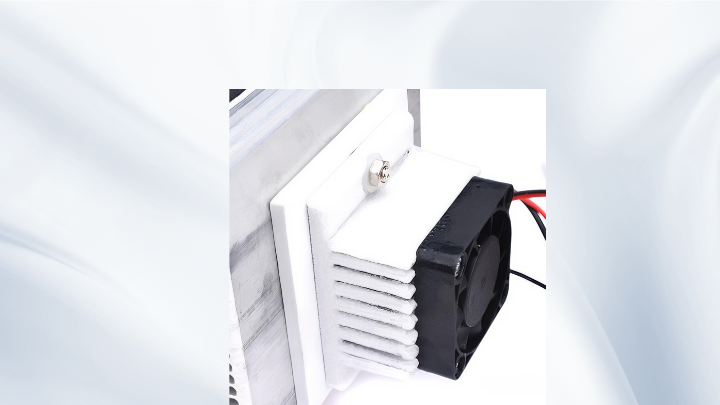
Choosing an appropriate TEC involves evaluating several parameters. The first is the cooling capacity, measured in watts, which must exceed the heat load you need to remove. Next, consider the maximum temperature difference (ΔTmax) between the hot and cold sides; typical values range from 60 to 70°C. Also, check the operating voltage and current to match your power supply. For tight spaces, you might prefer a single-stage cooler, while for large ΔT requirements, a multi-stage TEC is necessary. Dongguan TEC Coolers come in various configurations, including standard, high-temperature, and miniature versions. It’s advisable to use a heat sink and fan on the hot side to dissipate heat effectively. Additionally, consider the thermal interface material between the cooler and the object to minimize thermal resistance.
Installation and Maintenance Tips
Proper installation is critical for optimal performance. Always mount the TEC with a smooth, flat surface to ensure good thermal contact. Apply a thin layer of thermal paste or use a thermal pad to eliminate air gaps. Secure the cooler with screws, but avoid overtightening to prevent cracking. When operating, maintain the hot side temperature within the specified range; if exceeded, performance degrades. Over time, ensure the fan or heat sink is clean and free of dust. Unlike compressor systems, TECs do not require refrigerant refills, but check electrical connections periodically. Dongguan TEC Coolers are robust, but protecting them from moisture and condensation is essential, especially in high-humidity environments. Using a conformal coating or a proper enclosure can extend their life.
Common Questions About Thermoelectric Coolers
1. How efficient are thermoelectric coolers compared to conventional compressors?TECs are generally less efficient (COP 0.4-0.6) than compressor systems (COP 2-3) for large temperature differences, but their benefits of compactness, precision, and reliability outweigh the energy cost in many applications. For low-power and small-scale cooling, they are highly efficient.
2. Can a TEC be used to both cool and heat?Yes, by reversing the polarity of the DC current, the heat transfer direction reverses, allowing the same device to provide heating or cooling. This makes TECs suitable for temperature stabilization above and below ambient.
3. What is the lifespan of a Dongguan TEC Cooler?With proper use and heat management, most TECs last over 200,000 hours. Failures are often due to thermal cycling stress or moisture ingress. Choosing a sealed model and following mounting guidelines can maximize lifespan.
4. How do I control the temperature of a TEC system?You can use a PID controller with a temperature sensor (thermistor or RTD) to adjust the current and maintain a setpoint. Many Dongguan TEC modules are paired with controllers for seamless integration.
5. Are there any special safety considerations?TECs operate at low voltages (typically 3-12V) so they are safe. However, ensure the power supply is properly regulated to avoid overcurrent. Also, avoid running the TEC without a heat load or heat sink, as it can overheat and fail.
