





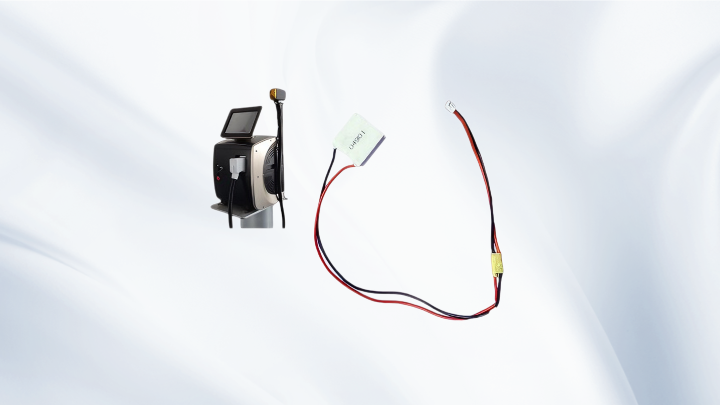
The Most Stable TEC Cooler: A Comprehensive Guide to Thermoelectric Coolingthermoelectric cooler
Understanding Thermoelectric Coolers
A thermoelectric cooler (TEC), also known as a Peltier device, is a semiconductor-based heat pump that moves heat from one side of the device to the other when an electric current is applied. Unlike traditional compressor-based refrigeration, TECs have no moving parts, making them highly reliable and maintenance-free. They are widely used in applications requiring precise temperature control, such as laser diode cooling, medical diagnostics, and scientific instruments.
What Makes a TEC Stable?
The Most Stable TEC Cooler is characterized by its ability to maintain a consistent temperature differential (ΔT) over time, even under varying thermal loads. Key factors contributing to stability include:
- Premium Materials: High-quality bismuth telluride (Bi2Te3) semiconductor pellets ensure efficient heat transfer and minimal performance degradation.
- Robust Construction: Ceramic substrates with matched thermal expansion coefficients prevent cracking and delamination.
- Precise Manufacturing: Tight tolerances in pellet geometry and solder joints ensure uniform current distribution and predictable performance.
- Advanced Control Integration: TECs paired with PID controllers or TEC controllers can achieve temperature stability within ±0.01°C.
For demanding applications like laser diode temperature stabilization, a stable TEC is essential to prevent wavelength drift and power fluctuations.
Top Features to Consider
When selecting the most stable TEC cooler, consider the following:
- ΔT (Temperature Differential): The maximum temperature difference the TEC can achieve between its hot and cold sides. A higher ΔT (e.g., 70°C or more) provides greater cooling capacity.
- Qmax (Maximum Heat Pumping Capacity): The maximum amount of heat the TEC can absorb at the cold side when ΔT=0. Choose a TEC with Qmax exceeding your heat load by 30-50% for optimal performance.
- IMax and VMax: Current and voltage at maximum performance. Ensure your power supply can deliver these values.
- Form Factor: Standard sizes (e.g., 40x40mm) are common, but custom sizes are available for unique geometries.
- Reliability Ratings: Look for TECs with MTBF (Mean Time Between Failures) ratings exceeding 200,000 hours, indicating long-term stability.
Applications of Stable TECs
The Most Stable TEC Cooler finds use in precision industries:
- Laser Systems: Maintaining constant laser diode temperature prevents mode hopping and ensures stable output.
- DNA Amplification (PCR): Rapid and precise temperature cycling is critical for accurate genetic testing.
- Photodetectors: Cooling reduces dark current, enhancing sensitivity in infrared and low-light sensors.
- Microfluidics: Controlled temperature zones in lab-on-a-chip devices.
- Beverage Cooling: Portable refrigerators and wine coolers benefit from vibration-free, reliable operation.
Best Practices for Long-Term Stability
To maximize the stability and lifespan of your TEC cooler, follow these guidelines:
- Proper Heat Sinking: Always attach a sufficiently sized heat sink to the hot side; inadequate cooling reduces ΔT and can cause thermal runaway.
- Controlled Start-Up: Ramp up current gradually to avoid thermal shock across the ceramic plates.
- Use a PID Controller: A feedback loop adjusts current based on temperature sensor input, maintaining setpoint despite ambient changes.
- Avoid Extreme Temperatures: Operate within the manufacturer's specified temperature range (usually -40°C to 150°C) to prevent solder fatigue.
- Regular Cleaning: Keep surfaces clean to ensure good thermal contact.
Common Questions About TEC Coolers
1. How long do TECs typically last?With proper use, a high-quality TEC can last over 200,000 hours (more than 20 years) because it has no moving parts. The main failure modes are thermal fatigue and solder joint degradation, which can be mitigated by using stable designs.
2. Can a TEC cool a room?TECs are inefficient for large-scale cooling compared to compressors. They are best suited for small, localized cooling where precision is more important than capacity. A typical TEC can handle heat loads up to 150 watts.
3. Why is my TEC not cooling as expected?Common causes include: poor heat sink contact, insufficient current, reversed polarity, or an oversized heat load. Check that the power supply is correct, the hot side is adequately cooled, and connections are secure.
4. Are there any dangers of using a TEC?If the TEC is operated without a heat sink, the hot side can reach high temperatures, potentially causing burns or fire. Also, condensation can form on the cold side if it is below dew point, which may require insulation.
5. What is the difference between a single-stage and multi-stage TEC?A multi-stage TEC stacks multiple Peltier elements to achieve a higher ΔT, but at the cost of reduced efficiency. Multi-stage TECs are used when extreme temperature differences (up to 130°C) are needed, but they are less stable due to increased complexity.