





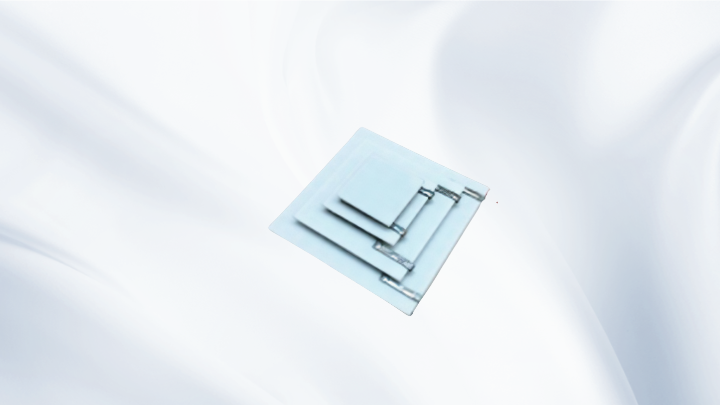
TEC Cooler Product: A Comprehensive Guide to Thermoelectric Cooling Solutionsthermoelectric cooler
Introduction to TEC Cooler Products
Thermoelectric coolers, commonly referred to as TEC Cooler Products, are innovative solid-state devices that leverage the Peltier effect to transfer heat from one side of the module to the other. Unlike traditional compressor-based refrigeration, TECs have no moving parts, making them highly reliable, compact, and maintenance-free. These products are essential in applications where precise temperature control, silent operation, and miniaturization are critical.
How Does a TEC Cooler Product Work?
A TEC consists of two ceramic substrates with an array of p-type and n-type semiconductor pellets sandwiched between them. When a DC current flows through the module, heat is absorbed on the cold side and released on the hot side. The heat transfer rate is directly proportional to the current applied, allowing for precise temperature regulation. Reversing the polarity converts the cooler into a heater, providing dual-functionality. This flexibility makes TEC Cooler Products ideal for thermal management in various industries.
Key Benefits of TEC Cooler Products
The advantages of TEC Cooler Products are numerous. Firstly, their solid-state design ensures quiet operation, as there are no mechanical components to wear out. Secondly, they are highly reliable with a lifespan exceeding 200,000 hours when properly maintained. Thirdly, TECs offer exceptional temperature stability, often achieving temperature control within ±0.1°C or better. Additionally, they are compact and lightweight, fitting into space-constrained systems. Finally, TEC Cooler Products are environmentally friendly, using no refrigerants or greenhouse gases.
Common Applications of TEC Cooler Products
TEC Cooler Products are used across a wide range of fields. In consumer electronics, they cool laser diodes, CCD sensors, and microprocessors. In medical devices, they maintain precise temperatures for diagnostic equipment and sample storage. The automotive industry utilizes TECs for beverage coolers and seat climate control. Moreover, TECs are vital in pharmaceutical and laboratory settings for temperature-sensitive reagents and photonic components. Their versatility makes them indispensable in both industrial and commercial applications.
How to Select the Right TEC Cooler Product
Choosing the correct TEC Cooler Product requires careful consideration of several factors. First, calculate the heat load that the cooler must handle. This includes both the active heat generation (e.g., from an electronic component) and the passive heat leakage from insulation. Second, determine the required temperature differential (ΔT) between the hot and cold sides. Higher ΔT demands larger or more efficient TECs. Third, consider the electrical requirements—voltage, current, and power—ensuring your power supply can meet them. Finally, evaluate the physical dimensions and mounting options to fit your application. Using tools like TEC performance curves can greatly aid in selection.
Installation and Thermal Management Tips
Proper installation is crucial for optimal TEC performance. Apply a thin, even layer of thermal interface material (TIM) between the TEC and the heat sink to reduce thermal resistance. Use a heat sink capable of dissipating the hot-side heat efficiently; otherwise, the TEC may struggle to achieve desired cooling. For high-heat applications, consider using fans or liquid cooling. Additionally, secure the TEC with screws or clamps to ensure even pressure, avoiding mechanical stress that could crack the ceramic plates. Regular cleaning of heat sinks and fans can also maintain performance.
Common Issues and Troubleshooting
Despite their reliability, TEC Cooler Products can encounter issues. If the cold side isn't cooling, check the power supply and polarity—reversed connections lead to heating instead. Overheating of the hot side often indicates insufficient heat sink capacity or poor thermal contact. Condensation may form when the cold side temperature is below the dew point; thus, proper insulation and moisture control are essential. If the TEC fails, it might be due to excessive current or mechanical damage. Always operate within the specified voltage and current ranges to avoid thermal runaway.
Frequently Asked Questions (FAQ)
What is the lifespan of a TEC Cooler Product?
With proper use and thermal management, TECs can last over 200,000 hours, translating to more than 20 years of continuous operation. However, thermal cycling and excessive temperatures can shorten their lifespan.
Can a TEC Cooler Product achieve sub-zero temperatures?
Yes, but the maximum temperature difference (ΔT) is typically around 70°C. To achieve lower temperatures, you may need multiple TECs in cascade or combined with other cooling methods.
How efficient are TEC Cooler Products compared to compressor coolers?
TECs are generally less efficient for large-scale cooling, but for small, precise applications where space and reliability are critical, they are often the preferred choice. Their coefficient of performance (COP) is lower, but their benefits outweigh energy consumption in many scenarios.
