





Selecting a Guangzhou Thermoelectric Cooler: An Engineer’s Guide
Why Guangzhou Matters in Thermoelectric Cooling
For engineers sourcing thermoelectric modules, Guangdong Province—and Guangzhou in particular—has become a central manufacturing region for Peltier coolers. The availability of supply chain components, skilled assembly, and export infrastructure makes Guangzhou a practical source for standard and custom TEC modules.
But the phrase Guangzhou thermoelectric cooler is not a single product specification. It refers to a wide range of thermoelectric cooling devices manufactured in the region, from miniature modules for laser diodes to high-capacity squares for industrial enclosures. As with any component selection, you must evaluate the module itself, not just the geographic origin.
How Thermoelectric Coolers Work
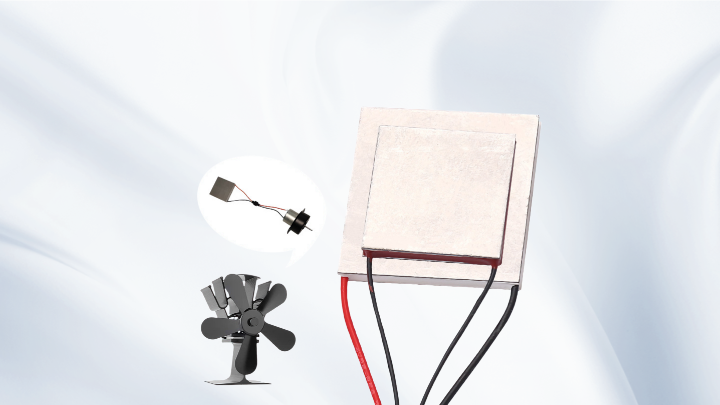
A thermoelectric cooler operates on the Peltier effect. When DC current passes through the junction of two different semiconductor materials, heat is absorbed on the cold side and released on the hot side. The result is a solid-state heat pump—no refrigerants, no moving parts, and no noise.
This makes TECs ideal for precision temperature control, spot cooling, and applications where reliability and compactness are critical. However, the performance of any thermoelectric cooler depends heavily on the thermal system around it.
Key Specifications: Qmax, ΔTmax, Imax, Vmax
To select a Guangzhou thermoelectric cooler with confidence, you need to understand its datasheet parameters. The most important are:
- Qmax – the maximum heat absorption capacity (in watts) when the cold side is at the same temperature as the hot side (ΔT = 0).
- ΔTmax – the maximum temperature difference achievable when there is no heat load (Q = 0).
- Imax – the input current at Qmax and ΔTmax.
- Vmax – the voltage required to supply Imax.
Critical point: Qmax and ΔTmax cannot be achieved simultaneously. They are two extremes of the same curve. In practice, your TEC operates somewhere between those points, determined by the heat load, the hot-side temperature, and the current supplied.
Matching Cooling Capacity to Your Heat Load
Selection starts with knowing your system’s total heat load. This includes the active heat generated by the object being cooled (e.g., an electronic chip or laser diode) plus any parasitic heat leaking into the cold side from the surrounding environment.
Once you have the heat load (Q_load), consider the required cold-side temperature (Tc) and the expected hot-side temperature (Th). The temperature difference ΔT = Th – Tc is what the TEC must work against. Using the manufacturer’s performance curves, you can estimate the required Qmax and select a suitable TEC. A common rule of thumb is to chose a module with a Qmax at least 30–50% higher than your calculated heat load, leaving headroom for variability and aging.
The Critical Role of Hot-Side Heat Dissipation
The single most common mistake in thermoelectric cooling is underestimating the hot side. A Peltier module does not eliminate heat—it moves it from the cold side to the hot side. The total heat released on the hot side is equal to the heat absorbed from the cold side plus the electrical input power (Qhot = Qcold + Pin).
If the hot side cannot dissipate that heat effectively, the hot-side temperature rises. That raises ΔT, reduces cooling capacity, and can eventually cause the TEC to “run away” and fail. Therefore, a well-designed heatsink and fan assembly is mandatory for almost any TEC application. Use thermal interface materials (TIMs) with low thermal resistance between the TEC and heatsink, and always consider the thermal resistance of the heat path.
Working with a Guangzhou Thermoelectric Cooler Manufacturer
When you contact a Guangzhou thermoelectric cooler manufacturer, be prepared to share your actual application parameters:
- Required cooling capacity (Q_load) in watts
- Target cold-side temperature
- Expected hot-side temperature or ambient range
- Available input voltage and current
- Physical space constraints
- Required linear dimensions and thickness
- Environmental conditions (humidity, vibration, contamination)
A reputable manufacturer will use these parameters to recommend a standard module or propose a custom design. They should also provide performance curves and thermal resistance data, and be willing to explain how their modules behave outside nominal conditions.
It is always advisable to request samples and test them in your actual system before bulk purchasing. Even the best Guangzhou thermoelectric cooler cannot overcome a poorly designed heatsink or an incorrect mounting assembly.
Frequently Asked Questions
1. Can I use a Guangzhou thermoelectric cooler for both cooling and heating?
Yes. Reversing the polarity of the DC current will reverse the direction of heat pumping. However, the hot and cold sides swap roles, so you must design the module and its mounting accordingly. Many TEC controllers support bidirectional operation for temperature stabilization.
2. How long does a thermoelectric cooler last?
TECs are solid-state devices with no moving parts, so their lifespan is typically limited by thermal cycling fatigue and environmental stress. With proper mounting, adequate heat dissipation, and controlled operating conditions, modules can last tens of thousands of hours. Always follow the manufacturer’s recommendations for maximum operating temperature and storage conditions.
3. What happens if I exceed Imax or Vmax?
Operating a TEC above its rated current or voltage can cause excessive Joule heating, leading to a reduced ΔT, thermal runaway, and irreversible damage to the semiconductor elements. Always drive the module within its specified range, and consider using a PID controller for precise current regulation.
4. Why is my TEC not cooling as expected?
Common causes include insufficient heat dissipation on the hot side, incorrect electrical polarity, high thermal resistance from the cold side to the load, or an under-specified module. Re-evaluate your heat load and measure the hot-side temperature—it is rarely inaccurate to suspect the TEC itself.
5. Can I get a custom Guangzhou thermoelectric cooler for my specific size?
Many manufacturers in Guangzhou offer customized thermoelectric cooler designs. Custom options may include specific dimensions, lead wire length, ceramic substrate materials, or multi-stage configurations. Work directly with the engineering team to avoid unnecessary tooling costs and lead times.
Conclusion
Selecting the right Guangzhou thermoelectric cooler is a structured process that requires a clear understanding of your thermal load, operating temperatures, and system constraints. You must evaluate datasheet parameters like Qmax and ΔTmax correctly, and remember that the overall system performance depends just as much on heat dissipation and thermal interface design as on the TEC itself.
By working closely with an experienced TEC manufacturer in Guangzhou, you can obtain a reliable Peltier cooler that meets your performance targets, fits your physical package, and offers the long service life your application demands.
