


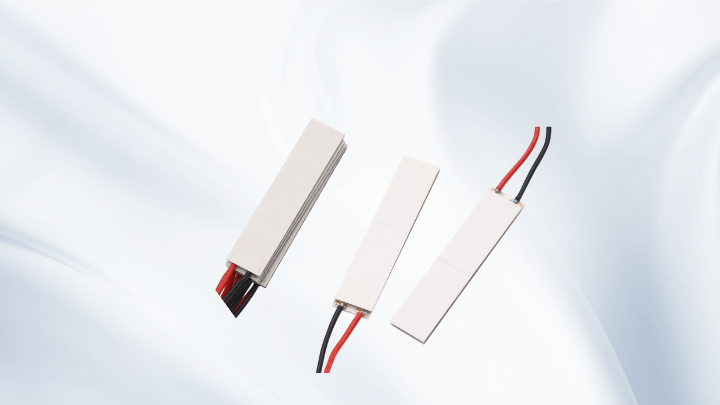
Inside a Thermoelectric Cooler Manufacturing Plant: Engineering, Quality, and Sourcing Guide
What a Thermoelectric Cooler Manufacturing Plant Actually Delivers
A Thermoelectric Cooler Manufacturing Plant is often described as a place where Peltier modules are assembled, but that definition is too narrow for engineers evaluating a supplier. A capable plant combines semiconductor pellet handling, ceramic substrate preparation, solder and bonding processes, sealing, electrical test, thermal test, and traceability. The output is not only a TEC module but a repeatable thermal component whose behavior must be understood inside the customer's system. For a Peltier cooler or thermoelectric cooler, small process variations can affect contact resistance, cooling capacity, power consumption, and long-term stability. Buyers should therefore look beyond catalog pages and examine how the plant controls these variables.
Thermoelectric cooling is a semiconductor cooling method, so manufacturing discipline matters. Pellet sorting, solder void control, ceramic flatness, and interface cleanliness all influence thermal resistance between the cold side and hot side. A plant with strong process documentation can explain how it handles incoming materials, work-in-process controls, final inspection, and failure analysis. That information is often more valuable than a short specification table because it shows whether the TEC module will behave consistently across production lots.
From TEC Design Inputs to a Buildable Module
Before a plant can recommend a thermoelectric cooler, the customer must define the real operating conditions. The important inputs include heat load, target cold-side temperature, expected hot-side temperature, ambient temperature, available voltage and current, allowable power consumption, module size, duty cycle, and mounting constraints. These inputs determine whether a single-stage TEC, miniature TEC, high-temperature TEC, multi-stage TEC, or custom TEC approach is appropriate.
Datasheet values such as Qmax, ΔTmax, Imax, and Vmax are reference points, not guarantees for every application. Qmax is the maximum cooling capacity at a defined condition, usually with zero temperature difference. ΔTmax is the maximum temperature difference at zero heat load. They are not normally achieved at the same operating point. A plant that explains this relationship clearly is more useful than one that suggests both values can be used simultaneously. Actual TEC performance depends on heat load, hot-side temperature, cold-side temperature, input voltage, input current, heatsink performance, thermal resistance, thermal interface material, installation conditions, and ambient temperature.
This is why TEC selection should start with the thermal problem, not with a module part number. If the cooling capacity is too low, the cold side will not reach target. If the hot side cannot reject heat effectively, the temperature difference will collapse even with a high-performance Peltier module. A well-run Thermoelectric Cooler Manufacturing Plant can help translate application requirements into a workable module and system design without inventing performance data.
Manufacturing Process Controls That Affect Thermoelectric Cooling Performance
The quality of a thermoelectric cooler is built through controlled processes. Semiconductor pellets must be handled to avoid contamination and damage. Solder joints should be evaluated for voids and consistent bond lines because poor joints increase electrical resistance and thermal resistance. Ceramic substrates must remain flat and clean so that thermal interface materials can work correctly. Sealing and curing are also important because moisture and contamination can degrade long-term reliability.
Inspection should not stop at visual checks. A professional plant should define electrical test methods, thermal test methods, and acceptance criteria for parameters such as electrical resistance, cooling capacity, and temperature difference under specified conditions. Traceability from material lot to finished TEC module helps isolate issues if a customer reports a performance shift. Thermal cycling and power cycling can also reveal weaknesses that a simple incoming inspection may miss, but the specific test plan should match the application risk rather than rely on generic claims.
How to Evaluate a Thermoelectric Cooler Manufacturing Plant
When qualifying a supplier, ask practical engineering questions. How are incoming ceramic substrates and semiconductor pellets inspected? What process controls are used for solder bonding and curing? How is thermal resistance checked? What data can be provided with each lot? How are nonconforming modules handled? A serious Thermoelectric Cooler Manufacturing Plant should be able to explain these points in plain language and provide sample test reports that match the agreed specification.
Also discuss design support. Some applications need standard thermoelectric cooler modules, while others benefit from custom TEC design, miniature TEC formats, high-temperature TEC construction, or multi-stage TEC configurations. KKG's TEC product categories can support these discussions, but the starting point should always be the thermal requirement. A supplier who asks about heat load, hot-side conditions, voltage limits, and mechanical constraints before quoting is usually better prepared to support volume production than one who quotes only from a catalog.
Thermal Management and System-Level Integration
A TEC module is only one part of a cooling system. Heatsink performance, fan airflow, thermal interface material, mounting pressure, and ambient conditions determine how much heat can be moved from the cold side to the hot side. If the hot side rises, the achievable temperature difference decreases, and power consumption may increase. Engineers should treat the TEC, heatsink, and enclosure as a single thermal management problem.
Mounting details matter as well. Uneven pressure can crack ceramics or create poor thermal contact. Too little pressure can leave a thick interface layer with high thermal resistance. Condensation control is another system-level concern when the cold side operates below dew point. A capable plant can advise on module selection, but the customer must provide realistic system conditions so the recommendation is not based on ideal laboratory assumptions.
Practical Application Scenarios and Common Engineering Mistakes
Thermoelectric cooling is used in compact enclosures, laser systems, medical diagnostics, analytical instruments, and other applications where size, controllability, or vibration-free operation matters. In these systems, a common mistake is selecting a Peltier cooler by Qmax alone. Another is ignoring the hot-side path until late in development. A third is assuming that a higher input current always improves cooling. In practice, voltage, current, heat load, and temperature difference must be balanced together.
Miniature TEC modules may suit space-constrained designs, while multi-stage TEC modules may be considered when a larger temperature difference is needed at low heat load. High-temperature TEC options may be relevant when the hot side is warm, but the exact suitability depends on materials, construction, and operating conditions. Custom TEC design can help when standard formats do not fit the mechanical envelope, but customization should be based on measurable requirements rather than guesswork.
Frequently Asked Questions
What information should I prepare before contacting a Thermoelectric Cooler Manufacturing Plant?
Prepare the heat load, target cold-side temperature, expected hot-side and ambient conditions, available voltage and current, size limits, duty cycle, condensation risk, and mounting constraints. These details allow the plant to discuss TEC module selection, heatsink requirements, and whether a single-stage, miniature, multi-stage, or custom TEC approach is reasonable.
Can Qmax and ΔTmax be reached at the same time?
Normally no. Qmax is associated with maximum cooling capacity at zero temperature difference, while ΔTmax is associated with maximum temperature difference at zero heat load. Real operation falls between these reference points and depends on input power, hot-side temperature, cold-side temperature, and thermal resistance.
Why does hot-side temperature matter so much?
The hot side is where heat is rejected. If the heatsink or ambient conditions cannot remove that heat, the hot-side temperature rises and the achievable temperature difference falls. Good thermal management, including a suitable heatsink and thermal interface material, is essential for stable thermoelectric cooling performance.
How can I confirm process quality?
Ask for process documentation, inspection criteria, electrical and thermal test methods, traceability practices, and failure analysis procedures. Sample reports should match the agreed specification. Do not rely only on a catalog claim; verify how the plant measures and controls the parameters that matter to your application.
Conclusion
Choosing a Thermoelectric Cooler Manufacturing Plant is ultimately a thermal-management and engineering-support decision. The right supplier should understand Qmax, ΔTmax, voltage, current, heat load, hot-side conditions, thermal resistance, and system integration rather than simply sell a module. By evaluating process control, test discipline, custom design capability, and application support, engineers can reduce risk and select a TEC solution that performs reliably in the final product.
META TITLE: Thermoelectric Cooler Manufacturing Plant: Sourcing Guide
META DESCRIPTION: Learn how a Thermoelectric Cooler Manufacturing Plant supports TEC design, process control, thermal testing, and custom Peltier module sourcing for reliable cooling.