





How to Select a Dongguan Thermoelectric Cooler: A Practical Engineering Guide
What Is a Dongguan Thermoelectric Cooler and How Does It Work?
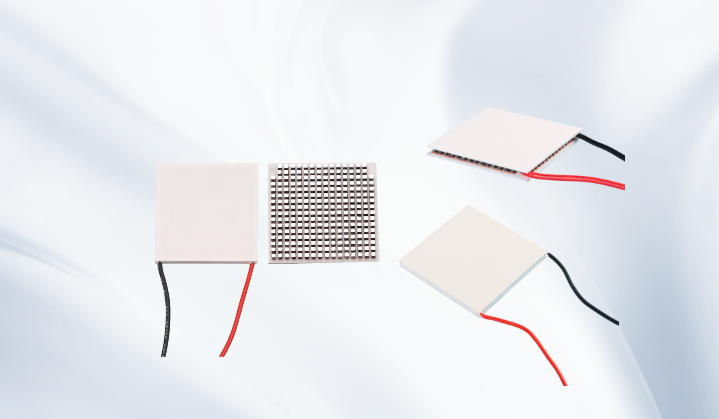
A Dongguan Thermoelectric Cooler is a solid-state heat pump that transfers heat from one side of the module to the other when DC current is applied. These TEC modules are widely used in applications requiring precise temperature control, such as laser diode cooling, medical devices, and electronics enclosures. Manufacturing hubs like Dongguan have become key sources for thermoelectric coolers due to their mature semiconductor supply chain and engineering expertise.
The working principle relies on the Peltier effect. When current flows through the junction of two dissimilar semiconductors (Bismuth Telluride typically), heat is absorbed at the cold side and released at the hot side. This allows the cold side temperature to drop below ambient, enabling active cooling without moving parts or refrigerants.
Key Specifications to Understand Before Choosing a TEC Module
Manufacturers of Dongguan Thermoelectric Cooler modules typically provide a datasheet with four primary parameters: Qmax, ΔTmax, Imax, and Vmax. Understanding these is critical for proper selection.
Qmax (Maximum Cooling Capacity)
Qmax is the maximum amount of heat the TEC can absorb at the cold side when the hot side is at a specified temperature and the temperature difference across the module is zero. It is expressed in watts (W). In practice, Qmax is only reached when the cold side is forced to stay at the same temperature as the hot side—an unrealistic condition for most applications.
ΔTmax (Maximum Temperature Difference)
ΔTmax is the maximum temperature difference the module can maintain between hot and cold sides when no heat load is applied (Q=0). This parameter is measured in degrees Celsius (°C) under vacuum or a specified environment. Like Qmax, ΔTmax is an extreme limit and cannot be achieved simultaneously with Qmax under normal operation.
Imax and Vmax
Imax is the current that produces Qmax, and Vmax is the voltage at that current. These values help determine the necessary power supply requirements. However, operating at Imax is rarely optimal, because efficiency drops sharply at high current due to Joule heating. In practice, most TECs operate at 50–70% of Imax to balance cooling capacity and coefficient of performance (COP).
Calculating Your Heat Load and Required Cooling Capacity
To select the correct Dongguan Thermoelectric Cooler, you must first estimate the heat load your application needs to remove. This total thermal load consists of:
Active heat load – heat generated by the object itself (e.g., electronic chips, laser diodes, batteries).
Passive heat load – heat leaking into the cooled space from the environment through insulation, convection, and radiation.
Sum these values to get the total heat load (Qtot). Then choose a TEC module whose Qmax is larger than Qtot. A safety margin of 20–30% is common to account for voltage fluctuations, aging, and imperfect insulation.
A typical selection process involves:
1. Determine the target temperature of the cold side and the expected hot side temperature.
2. Estimate the temperature difference (ΔT = Thot - Tcold) across the module.
3. Calculate the total heat load.
4. Review the TEC performance curves from a Dongguan Thermoelectric Cooler supplier and pick a module that delivers the required cooling capacity at your operating current and ΔT.
Remember that the actual cooling capacity is highly dependent on the hot side temperature. A higher hot side temperature reduces the ability of the Peltier module to pump heat, so careful thermal management is essential.
The Importance of Heat Dissipation and Hot-Side Design
The performance of a Dongguan Thermoelectric Cooler is only as good as its heatsink. The hot side rejects the sum of the absorbed heat and the electrical power consumed by the module. If this heat is not dissipated efficiently, hot side temperature rises, which increases ΔT and decreases cooling capacity.
Select an appropriate heat dissipation solution, such as a finned aluminum heatsink with forced air like a DC fan, or a water-cooled plate for high heat loads. The heatsink's thermal resistance (°C/W) determines the temperature rise above ambient. Lower thermal resistance is preferred but often comes with larger size and higher cost.
Use a high-quality thermal interface material (TIM) such as thermal grease or phase-change pad between the TEC hot side and heatsink to minimize contact resistance. Tight and uniform mounting pressure is also critical—excessive pressure can crack the ceramic plates, while insufficient pressure creates air gaps that insulate heat.
Selecting the Right TEC for Your Application: A Step-by-Step Approach
Step 1: Define Your Thermal Requirements
List the desired cold side temperature, the maximum ambient temperature, and any transient thermal loads. For example, if you need to cool a 50W laser diode to 20°C in a 30°C ambient, you already know the approximate cooling capacity and ΔT.
Step 2: Choose the Number of Stages
For high ΔT applications (>70°C), a single-stage Dongguan Thermoelectric Cooler may not suffice. Multi-stage TECs stack several Peltier elements to achieve larger temperature differences. However, they have lower efficiency and lower maximum cooling capacity per module. For most applications with moderate ΔT, a single-stage module is the cost-effective choice.
Step 3: Review Performance Curves
Every reputable TEC manufacturer provides curves of cooling capacity versus current at various ΔT values. Use these graphs to find the operating point where your module can pump the required heat load while staying within a safe voltage range. Work with a supplier who can recommend a custom or off-the-shelf module based on your operating conditions.
Step 4: Check Power Supply and Control
Thermoelectric coolers require smooth DC power. Ripple and noise can reduce efficiency and shorten module life. A PID controller is often needed to maintain a stable cold side temperature. Always verify the operating voltage and current of the chosen module are compatible with your drive electronics.
Step 5: Account for Ambient Conditions
Condensation can occur if the cold side temperature falls below dew point. Proper insulation and sealing are needed in humid environments. Conversely, in hot environments, the heatsink must be sized for worst-case ambient.
Frequently Asked Questions About Dongguan Thermoelectric Coolers
What is the difference between a TEC and a Peltier cooler?
They are the same device. Thermoelectric cooler (TEC) is the technical term, while Peltier cooler refers to the Peltier effect that makes the module work. Both are used interchangeably in the industry.
How long does a Dongguan Thermoelectric Cooler typically last?
If operated within specifications and with proper heat dissipation, these modules have a long lifespan—often tens of thousands of hours—because they have no moving parts. However, thermal cycling stress can cause fatigue in solder joints over time. High-quality manufacturing and robust thermal design extend service life.
Can I run a TEC at voltages higher than Vmax?
No. Exceeding Vmax can cause excessive current and overheating, which may degrade the bismuth telluride semiconductor and lead to failure. Always operate within the rated maximum current and voltage.
Should I choose a Dongguan Thermoelectric Cooler or a compressor-based refrigerator?
For small heat loads, precise temperature stability, and space-limited applications, TECs are superior. For large cooling capacities, compressor systems are more energy-efficient. TECs also offer the advantage of cooling below ambient without bulky refrigerant lines.
Conclusion
Selecting a Dongguan Thermoelectric Cooler requires a solid understanding of thermoelectric parameters, heat load estimation, and thermal design. The key is to treat the TEC as one component of an integrated thermal management system where heatsink performance and ambient conditions play equal roles.
Dongguan Thermoelectric Cooler manufacturers like KKG offer a wide range of standard and custom modules. By clearly defining your cooling requirements and respecting the engineering principles outlined above, you can achieve reliable and efficient semiconductor cooling for your product. Always collaborate with an experienced TEC supplier to validate your selection through testing and simulation.
Meta Title: Dongguan Thermoelectric Cooler Selection Guide | KKG
Meta Description: Learn how to choose a Dongguan Thermoelectric Cooler for your application. Understand Qmax, ΔTmax, heat load calculation, and heat dissipation in this practical engineering guide.
