


How to Evaluate a Thermoelectric Cooler Company for Reliable TEC Design
How to Evaluate a Thermoelectric Cooler Company for Reliable TEC Design
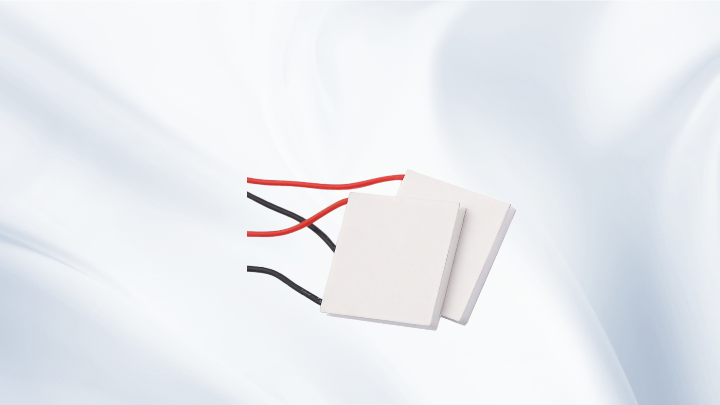
Selecting a Thermoelectric Cooler Company is part sourcing and part thermal engineering. A TEC module may look simple—two ceramic plates, semiconductor pellets, and lead wires—but its real performance in a Peltier cooler depends on heat load, hot-side temperature, cold-side temperature, input voltage, input current, heatsink performance, and installation. A capable Thermoelectric Cooler Company should help you evaluate those variables before you commit to a part number.
What a Thermoelectric Cooler Company Should Help You Define First
Before discussing a specific Peltier module, define the application boundary conditions. What is the target cold-side temperature? What is the ambient temperature around the hot side? How much heat must be removed from the load, including active heat and parasitic heat? What are the size, weight, power consumption, noise, duty-cycle, and control requirements? These inputs determine whether thermoelectric cooling is practical and which TEC module family is worth reviewing.
Without these details, Qmax and ΔTmax values are only datasheet reference points. A useful Thermoelectric Cooler Company will ask about the thermal path from the cold side to the hot side and from the hot side to ambient. It will also clarify whether the system needs a miniature TEC, a high-temperature TEC, a multi-stage TEC, or a custom TEC design.
Understanding Qmax, ΔTmax, and Real TEC Performance
Qmax is the maximum cooling capacity of a TEC module under a defined set of datasheet conditions, usually with the temperature difference between cold side and hot side at zero. ΔTmax is the maximum temperature difference the module can create when the heat load is zero. Imax and Vmax describe the current and voltage at those reference conditions. These parameters are useful for comparison, but they are not simultaneous operating points.
A TEC module cannot normally deliver Qmax and ΔTmax at the same time. In real operation, cooling capacity falls as the temperature difference increases. Actual performance also depends on hot-side temperature, cold-side temperature, heatsink thermal resistance, thermal interface material, mounting pressure, input voltage, input current, and ambient conditions. A TEC module rated for high Qmax does not automatically deliver that cooling capacity in a real assembly.
The thermal management principle is straightforward: the TEC moves heat from the cold side to the hot side, and the hot side must reject both the pumped heat and the electrical power input. If heat dissipation is weak, the hot side rises, the achievable temperature difference shrinks, and the cold side may never reach target even at high current.
Matching Cooling Capacity to Heat Load and Heat Dissipation
Cooling capacity must be selected against the total heat load, not only the desired cooling effect. The load may include electronics, sensors, optical components, enclosure gains from ambient, radiation, convection, and heat conducted through cables or mounts. A Peltier cooler that appears adequate on a datasheet can underperform if parasitic heat paths are ignored.
Heat dissipation is equally important. The hot side is connected to a heatsink through a thermal interface material, and the heatsink rejects heat to ambient. Poor contact, insufficient airflow, or high thermal resistance increases hot-side temperature. That reduces the available temperature difference and increases power consumption. In many designs, improving the heatsink and thermal interface is more effective than simply selecting a larger TEC module.
This is where the technical support of a Thermoelectric Cooler Company matters. KKG's standard TEC modules, miniature TEC modules, high-temperature TEC modules, multi-stage TEC modules, and custom TEC categories can be reviewed against the boundary conditions above, but the starting point remains the thermal requirement—not the part number.
Questions to Ask a Thermoelectric Cooler Company Before You Specify a TEC
Ask how the company defines datasheet conditions and whether it can explain the relationship between Qmax, ΔTmax, Imax, Vmax, and real operating limits. Ask for guidance on heatsink sizing, thermal resistance, thermal interface material, mounting method, and control strategy. Also ask how the TEC module behaves at the worst-case ambient temperature and heat load, not only at a nominal point.
For custom or space-constrained designs, ask about mechanical tolerances, sealing, condensation risk, wire routing, and reliability considerations. A professional Thermoelectric Cooler Company should be willing to discuss engineering trade-offs rather than only quote a model. It should also be clear about what is guaranteed by the datasheet and what must be validated in the actual system.
Application Scenarios Where TEC Selection Changes
In miniature cooling applications such as sensors, optics, or small enclosures, the design may prioritize compact size, low power consumption, and precise temperature control. In industrial or high-temperature environments, the hot-side conditions and heatsink performance become more critical. Multi-stage TEC modules may be considered when a larger temperature difference is required at a relatively low heat load, while custom TEC designs may be needed when geometry, sealing, or electrical interfaces do not fit a standard module.
Each scenario changes the selection emphasis. A Peltier cooler for a compact enclosure has different thermal management priorities from a TEC module used in a laboratory instrument or a semiconductor cooling assembly. The Thermoelectric Cooler Company should help match the module type to the application rather than force one platform into every design.
Design and Validation Checklist for Thermoelectric Cooling
Validate the design at worst-case ambient temperature, maximum heat load, and expected input voltage and current. Measure cold-side temperature, hot-side temperature, heatsink temperature, power consumption, and response time. Check thermal interface contact, mounting pressure, insulation, condensation control, and control-loop stability. Also review start-up behavior and failure modes, because a TEC system can be sensitive to overcurrent, reverse polarity, or loss of heatsink airflow.
A reliable Thermoelectric Cooler Company should provide clear datasheet conditions and application support without implying guaranteed performance outside those conditions. The final design should be verified in the real enclosure with the real heatsink and the real load, because thermoelectric cooling performance is a system property, not a module property alone.
Frequently Asked Questions
Can Qmax and ΔTmax be achieved at the same time?
No. Qmax is typically defined at zero temperature difference, while ΔTmax is defined at zero heat load. In real operation, cooling capacity decreases as the temperature difference increases, so the two values represent different reference points.
Is a TEC module with higher Qmax always better?
Not necessarily. A higher Qmax module may draw more current and require a larger heatsink. Selection should be based on heat load, target temperature difference, hot-side conditions, power budget, and thermal resistance of the complete assembly.
Why does my Peltier cooler fail to reach the target temperature?
Common causes include excessive heat load, insufficient hot-side heat dissipation, poor thermal interface contact, high ambient temperature, inadequate heatsink airflow, or operating the TEC module outside its intended voltage and current range. The thermal path should be reviewed before changing the module.
What information should I provide to a Thermoelectric Cooler Company for selection?
Provide target cold-side temperature, ambient temperature, total heat load, available space, allowable power consumption, duty cycle, control method, and mechanical constraints. These details allow the company to recommend a suitable TEC module family and explain the thermal design requirements.
What is the difference between Imax and normal operating current?
Imax is a datasheet reference current associated with maximum temperature difference under specified conditions. Normal operating current may be lower for efficiency, control stability, or lifetime reasons. The module should not be operated beyond its rated limits without validation.
Conclusion
A Thermoelectric Cooler Company is most useful when it acts as a thermal design partner, not just a parts supplier. By defining heat load, cooling capacity, Qmax, ΔTmax, heat dissipation, thermal resistance, and validation conditions early, engineers can avoid oversized modules, poor hot-side performance, and unexpected power consumption. The right TEC solution depends on the full thermal system, so selecting a suitable Peltier cooler or TEC module for the application is a technical decision that should be supported by clear datasheet data and practical engineering guidance.
Meta Title: Thermoelectric Cooler Company: TEC Selection Guide
Meta Description: Learn how to evaluate a Thermoelectric Cooler Company for TEC selection, cooling capacity, Qmax, ΔTmax, heat dissipation, and reliable thermal design.
