





How to Choose a Reputable Thermoelectric Cooler for Your Application
How to Choose a Reputable Thermoelectric Cooler for Your Application
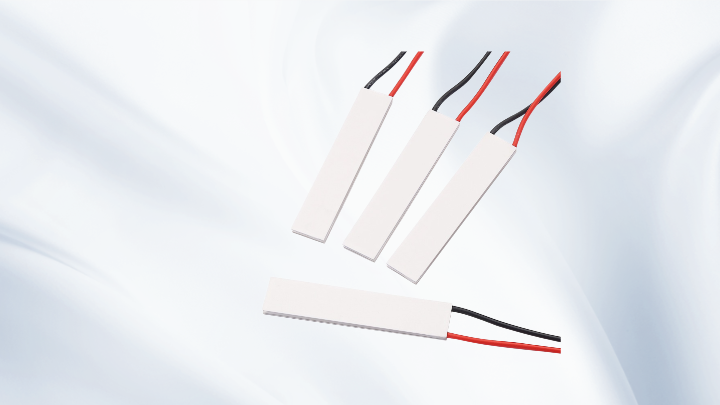
When your design depends on precise temperature control, the choice of a reputable thermoelectric cooler is not something to take lightly. A thermoelectric cooler (TEC), also known as a Peltier cooler or Peltier module, is a solid-state heat pump that moves heat from one side of the module to the other when direct current is applied. The performance, reliability, and operating life of your entire thermal management system can be determined by the quality and engineering behind that small ceramic plate. This article will walk you through the essential specifications, selection criteria, and practical engineering steps needed to identify a reputable thermoelectric cooler that truly fits your application.
What Makes a Thermoelectric Cooler Reliable?
A reputable thermoelectric cooler is more than just a component that gets cold on one side when powered. It is the result of careful material selection, precision assembly, and rigorous testing. Several factors distinguish a quality TEC module from a substandard one:
- Material quality: High-purity bismuth telluride semiconductor pellets are essential for consistent thermoelectric performance and long-term stability.
- Soldering integrity: Reliable modules use high-temperature solder and proper reflow processes to withstand thermal cycling and prevent premature failure.
- Ceramic substrate: Alumina or aluminum nitride ceramics provide mechanical strength and electrical insulation; warpage or micro-cracks can lead to performance degradation.
- Precision assembly: Consistent pellet height, correct orientation, and uniform solder joints affect the thermal and electrical resistance across the module.
- Testing standards: A trustworthy manufacturer performs thermal cycling, burn-in, and performance testing to verify each module meets its rated specifications.
When you choose a reputable thermoelectric cooler, you are not just paying for a component; you are paying for engineering confidence and predictable performance in your application.
Understanding Key TEC Specifications
To select a thermoelectric cooler correctly, you need to understand the fundamental performance parameters. These parameters define what a TEC module can do and how it will behave under your operating conditions.
Qmax (Maximum Cooling Capacity)
Qmax is the maximum heat the TEC can pump when the electrical current is at Imax and the temperature difference between the hot side and cold side is zero (ΔT = 0). It is expressed in watts (W). Qmax represents an upper limit — it cannot be achieved simultaneously with maximum temperature difference.
ΔTmax (Maximum Temperature Difference)
ΔTmax is the maximum temperature difference a TEC can maintain between its hot side and cold side when there is no external heat load and the module is driven at Imax. This value indicates how deep a temperature depression the module can produce under ideal, adiabatic conditions. Again, it cannot be achieved while also pumping a significant heat load.
Imax and Vmax
Imax is the electrical current that produces Qmax or ΔTmax. Vmax is the voltage drop across the module at Imax when the module is at ΔTmax. These values help you design the power supply and drive circuitry. Operating a TEC beyond its maximum ratings will shorten its life without providing proportional cooling.
Cooling Capacity vs. Heat Load
The actual cooling capacity of a TEC module depends on the heat load in your system. Heat load includes the active heat generated by the object being cooled, parasitic heat from the environment, and heat from the I²R effect within the module itself. To maintain a stable cold-side temperature, the TEC must pump this total heat load across the temperature difference between the hot side and cold side.
Therefore, when evaluating a TEC, do not simply compare Qmax values. Instead, match the module’s performance curves to your application’s specific thermal resistance and operating temperatures.
How to Verify a Manufacturer’s Capability
Choosing a reputable thermoelectric cooler is also about choosing a competent manufacturing partner. Here are practical steps to evaluate potential suppliers:
- Request comprehensive datasheets: A reliable manufacturer provides detailed performance curves (Qc vs. ΔT) and charts showing V and I relationships, not just a few numbers.
- Ask about quality control: Inquire about inspection processes, soldering standards, and testing procedures. A manufacturer that tests 100% of modules demonstrates confidence in their product.
- Verify thermal impedance data: The hot side of a TEC must be connected to an effective heatsink. A competent supplier will explain the importance of external thermal resistance and give guidance on heatsink selection.
- Look for customization expertise: If your application needs a special size, wiring configuration, or multi-stage assembly, the manufacturer should have the engineering staff to support you.
- Check industry experience: Applications in telecommunications, medical devices, automotive, or aerospace have different reliability requirements. A reputable thermoelectric cooler manufacturer with relevant experience will better understand your quality expectations.
When you work with a reputable thermoelectric cooler manufacturer, you can expect clear communication, realistic technical guidance, and a willingness to help you solve thermal challenges rather than simply selling a part.
Practical Selection Process for a TEC Module
To select the right TEC module, follow this engineering-oriented process:
- Define your thermal requirements: Determine the target cold-side temperature, the maximum allowable hot-side temperature, the ambient temperature, and the total heat load you need to remove.
- Consider the environment: Is the TEC operating in a vacuum, in still air, or with forced convection? This affects heatsink performance and the actual ΔT the TEC must overcome.
- Calculate the required ΔT: The temperature difference between the hot-side interface (often near ambient plus heatsink rise) and the desired cold-side temperature is the ΔT the TEC must maintain under load.
- Select an initial TEC: Use datasheets to find a module whose Qc (cooling capacity at your specific ΔT) is greater than your total heat load. Operate at a current lower than Imax to leave a safety margin and extend reliability.
- Evaluate hot-side thermal management: A TEC is only as good as its heatsink. The hot side must dissipate both the heat removed from the cold side and the electrical power consumed by the module. Calculate the required heatsink thermal resistance.
- Prototype and test: Nothing replaces real-world testing. Verify that the TEC actually achieves the target temperature under worst-case ambient conditions and heat loads.
Because this selection process involves multiple interdependent variables, working directly with an experienced thermoelectric cooling manufacturer can save you time and help you avoid trial-and-error. A reputable thermoelectric cooler supplier will typically assist with performance simulations or provide application engineering support.
Frequently Asked Questions
What is the lifespan of a thermoelectric cooler?
When operated within its rated parameters and properly mounted, a TEC module can operate for more than 200,000 hours. However, thermal cycling, moisture ingress, and excessive mechanical stress can shorten its life. A reputable thermoelectric cooler manufacturer designs modules for ruggedness and provides recommendations for mounting and encapsulation.
Can a TEC refrigerate without a heatsink?
No. Without a heatsink, the hot side will heat up rapidly, the temperature difference will collapse, and the module will eventually fail. Always pair a TEC module with an adequate heat dissipation solution.
How do I know if a TEC module is genuine and high-quality?
Look for consistent solder joints, flat ceramic surfaces, and a datasheet that shows full performance curves. Also check whether the manufacturer follows RoHS/REACH standards and offers a warranty. Purchasing from a reputable thermoelectric cooler manufacturer with a proven track record is the best guarantee.
Is it better to use one large TEC or several small TECs?
This depends on your target temperature difference and heat load. For large ΔT, multi-stage TEC modules are more effective than a single module. For high heat loads, multiple modules can be placed side-by-side. A qualified engineer can help you optimize the architecture.
Do TEC modules require a special power supply?
Yes. TECs are current-driven devices, so a current-limited power supply or a constant-current driver is recommended. Voltage ripple can affect performance; a stable DC source is important for precise temperature control.
Conclusion
Choosing a reputable thermoelectric cooler is a technical decision that depends on a thorough understanding of your application’s heat load, operating temperatures, and thermal management constraints. Qmax and ΔTmax are important reference points, but they are not the entire story. Actual cooling performance always depends on hot-side temperature, cold-side temperature, input current, heatsink effectiveness, and the quality of the thermal interface. By working with a manufacturer that provides complete specifications, transparent engineering support, and reliable quality control, you can ensure that your thermoelectric cooling system operates efficiently and continues to deliver stable thermal performance throughout its service life. Whether you are cooling a laser diode, a medical diagnostic cartridge, or a battery pack, the principles in this article will help you select a TEC module that meets your real-world needs.
META TITLE: How to Choose a Reputable Thermoelectric Cooler | KKG Guide
META DESCRIPTION: Learn how to select a reputable thermoelectric cooler with our technical selection guide. Understand Qmax, ΔTmax, heat load, and TEC reliability factors in this practical engineering article.
