





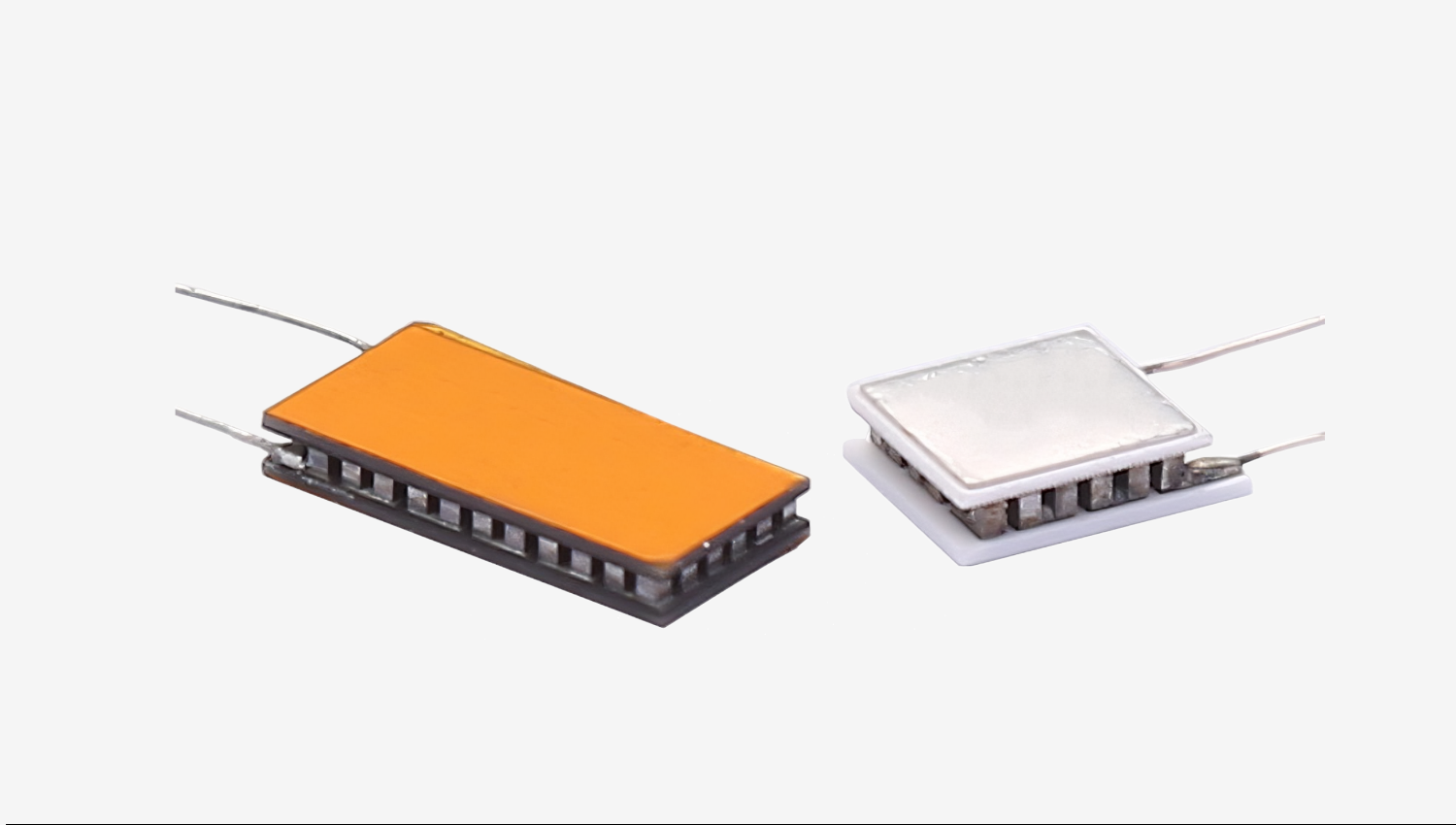
Guangdong Thermoelectric Cooler: How to Select the Right TEC Module
Choosing a Guangdong Thermoelectric Cooler is never a simple component selection process. It requires a clear understanding of thermal loads, operating temperatures, and heat dissipation. This guide outlines the fundamental engineering parameters that every design engineer should evaluate before selecting a thermoelectric cooler (TEC module) for a new project.
How a Thermoelectric Cooler Works
A thermoelectric cooler—often called a Peltier cooler or Peltier module—uses the Peltier effect to transfer heat from one side of the module to the other. When direct current flows through the semiconductor p-n junctions inside the TEC module, one face becomes cold and the opposite face becomes hot. This allows the module to pump heat against a temperature difference, which is the core function of any Guangdong Thermoelectric Cooler in active thermal management.
However, the cooling performance is not fixed. It depends heavily on the hot-side temperature, cold-side temperature, operating voltage, current, and the external thermal system. A TEC module does not generate cooling by itself; it only moves heat from one location to another. Therefore, if you remove heat poorly from the hot side, the overall system will not perform well even if the module specification appears sufficient.
Core Performance Parameters: Qmax, ΔTmax, Imax and Vmax
When you open a datasheet for a thermoelectric cooler, you will encounter four key parameters: Qmax, ΔTmax, Imax, Vmax. It is common for first-time users to misinterpret these values, so let us clarify how they relate to real-world operation.
Qmax is the maximum heat that the TEC module can absorb at the cold side when the temperature difference across the module is zero. This condition is theoretical and rarely occurs in practice because every real system has a thermal load and some temperature drop across the heatsink.
ΔTmax is the maximum temperature difference the module can achieve when the heat load at the cold side is zero. In other words, ΔTmax is the point where the module can no longer move any heat, and it is also measured at the same hot-side reference temperature.
Imax is the current that corresponds to the maximum cooling capacity condition, and Vmax is the voltage required at that current. A common mistake is to assume that a module can deliver Qmax and ΔTmax at the same time. That assumption is incorrect. The actual cooling capacity decreases as the temperature difference increases, and the system normally operates somewhere between zero and Qmax.
For a Guangdong Thermoelectric Cooler, the performance curves on the datasheet are essential. They show how cooling capacity changes with applied current and temperature difference. Instead of simply matching Qmax, an experienced design engineer selects the operating point that meets both the required heat load and the required cold-side temperature.
Guangdong Thermoelectric Cooler Selection: Estimating the Heat Load
The first step in selecting a TEC module is not choosing a module; it is calculating the heat load. If the heat-load estimate is too low for a Guangdong Thermoelectric Cooler, the system will never reach the target temperature. If the estimate is too high, the selection will be unnecessarily expensive and inefficient.
The total heat load usually includes three main components:
Active heat load is the heat generated by the electronic components inside the enclosure that need to be cooled. This includes processors, power amplifiers, laser diodes, sensors, or any other component that consumes power and releases heat.
Passive heat load is heat that enters the cooling chamber from the surrounding environment. This can come through insulation, enclosures, wiring, connectors, or air leakage. Even though the temperature difference is initially small, a well-insulated system will still experience passive heat ingress over time.
Dynamic heat load may also exist if the chamber contains internal mechanical parts, moving fluids, or materials that release heat as they cool. In many industrial applications, especially with liquid cooling or battery thermal management, this term should not be ignored.
After calculating the total heat load, you can begin to compare thermoelectric cooler modules by examining the Qc value at the desired operating delta T. For accurate results, always use the actual hot-side temperature rather than the ambient temperature. More importantly, never specify a module that will operate near ΔTmax at maximum load, because the cooling coefficient of performance (COP) drops drastically as the temperature difference increases.
Hot-Side Temperature and Heat Sink Performance
The performance of every thermoelectric cooler is strongly tied to its hot-side temperature. In fact, the cold-side temperature is determined by subtracting the module delta T from the hot-side temperature:
Tc = Th − ΔT
If the hot-side temperature rises because of an inadequate heatsink, the cold-side temperature will rise by the same amount—even if the module is drawing the same current. Therefore, an effective heatsink and thermal interface solution are critical in any system using a Guangdong Thermoelectric Cooler.
The heatsink must dissipate both the heat pumped from the cold side and the electrical power consumed by the TEC module. The total heat that the hot-side heatsink must remove is roughly:
Qh = Qc + Pin
where Qc is the cooling capacity at the cold side and Pin is the electrical power input to the module. This explains why a Peltier cooler is often used with a fan or liquid cooling loop: the heat rejection system must deal with more heat than the module itself actually removes.
Also important is the thermal resistance between the TEC module and the heatsink. Use a suitable thermal interface material (TIM), mount the module with even pressure, and maintain clean and flat surfaces. A thin air gap can significantly increase the thermal resistance and degrade performance. A good rule for thermoelectric cooler system design is to minimize every thermal interface between the cold side, the cooling target, and the heatsink.
Practical Steps for Choosing a TEC Module
For most projects, a practical selection process for a Guangdong Thermoelectric Cooler can be summarized in six steps.
First, define the operating environment, including ambient temperature, maximum hot-side temperature, and required cold-side temperature. Second, determine the heat load at the cold side with a safety margin that matches the worst-case operating condition. Third, calculate the required temperature difference across the module by subtracting the target cold-side temperature from the expected hot-side temperature.
Fourth, review the performance curves of candidate thermoelectric cooler modules and find the operating current that provides the needed cooling capacity at that delta T. Fifth, check that the module’s maximum current and voltage are compatible with your power supply or controller. Finally, design the hot-side thermal solution and evaluate the complete system in a prototype test.
During prototyping, monitor temperatures at both sides of the TEC module, not just the target temperature. If the hot-side temperature rises too much, you may need a larger heatsink, forced convection, or a different heat exchanger. If the cold side is not cold enough, the issue may not be the module but rather the thermal insulation, sealing, or heat leakage from the target object.
Multi-Stage, Miniature, and Custom TEC Options
Many applications require a thermoelectric cooler that goes beyond standard single-stage modules. For example, a two-stage or three-stage TEC module can achieve a much larger temperature difference, but it typically has a lower maximum cooling capacity and lower efficiency. Conversely, a miniature TEC module is useful for optoelectronics, sensors, and medical devices where space is limited but precise cooling is necessary.
Because thermoelectric coolers are used in many different industries, manufacturers in the Guangdong area often support custom designs and system-level engineering discussions. When selecting a Guangdong Thermoelectric Cooler for a demanding project, choose a manufacturer that can advise you on the right thermoelectric cooler design, including the number of stages, ceramic substrates, metallization, and proper wire termination. A reliable TEC manufacturer should provide this kind of engineering support, not simply hand you a catalog.
Frequently Asked Questions
How do I choose between a single-stage and a multi-stage Guangdong Thermoelectric Cooler?
Choose a single-stage module when the required temperature difference is within the range of a standard TEC and the main concern is cooling capacity. Choose a multi-stage module when you need a very large temperature difference, such as cooling a detector to -40 degree C from ambient temperature. Remember that multi-stage modules provide large delta T but reduce the maximum heat removal capability at that point.
What happens if I use too much current on my TEC module?
Applying excessive current beyond the rated Imax can cause the module to overheat internally due to Joule heating. This can reduce cooling capacity, lower efficiency, and permanently damage the thermoelectric elements or solder joints. Always operate within the recommended current range and read the current and voltage from the temperature control loop.
Why is my thermoelectric cooler not reaching the target temperature?
The most common reasons are insufficient hot-side heat dissipation, an overestimated cooling capacity value, poor thermal insulation, or incorrect mounting pressure. Check the hot-side temperature first, then verify the actual current and voltage supplied to the module. Also confirm that the target object is thermally coupled to the cold side and that no unnecessary heat enters from the environment.
Can a thermoelectric cooler be used for both cooling and heating?
Yes. If you reverse the polarity of the direct current, the heat transfer direction will reverse. This makes thermoelectric coolers useful for temperature stabilization applications where precise control is needed above and below ambient temperature. However, when used for heating, the cold side becomes the hot side, and the heat management strategy must be adjusted accordingly.
Conclusion
Selecting the right Guangdong Thermoelectric Cooler starts with a system-level approach. Understanding the relationship between Qmax and ΔTmax, estimating the true heat load, and designing a proper hot-side thermal solution are more important than simply choosing the largest module available.
Because thermoelectric cooling is an interdisciplinary challenge involving thermal mechanics, electronics, and manufacturing, the best approach is to work with an experienced thermoelectric cooler manufacturer that supports custom requirements. Whether you need a high-temperature TEC, a miniature Peltier module, or a multi-stage thermoelectric cooler, define your operating conditions clearly and always validate the design in a real thermal test. The right Guangdong Thermoelectric Cooler will give you reliable, precise, and energy-effective thermal control for your application.
Meta Title: Guangdong Thermoelectric Cooler: Key Parameters for Selection
Meta Description: Learn how to select a Guangdong Thermoelectric Cooler. Understand Qmax, ΔTmax, heat sink performance, and avoid common TEC design mistakes.
