





Domestic Thermoelectric Cooler: A Practical Selection and Application Guide
Introduction to Domestic Thermoelectric Cooler
A Domestic Thermoelectric Cooler is a solid-state cooling device that uses the Peltier effect to remove heat from a small enclosure. It is widely used in home mini-refrigerators, wine coolers, beverage cabinets, and cosmetic coolers because it operates with no moving parts, no refrigerant, and virtually no noise. But not all thermoelectric cooler modules are the same. Selecting the right Domestic Thermoelectric Cooler for your application requires more than just checking the size or voltage; you must understand cooling capacity, temperature difference, and thermal management.
How Does a Domestic Thermoelectric Cooler Work?
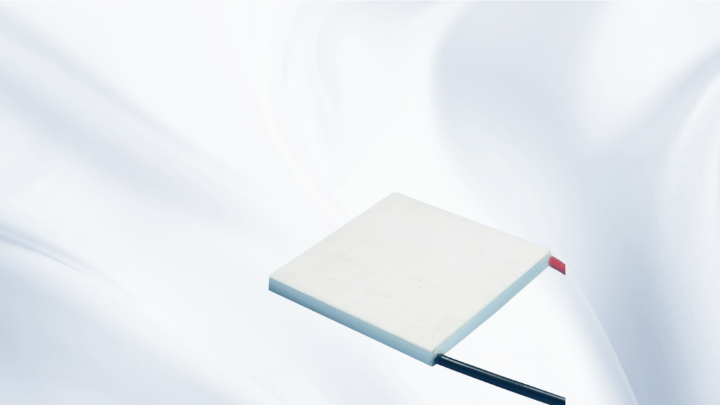
At the heart of any Domestic Thermoelectric Cooler is a Peltier module—also called a thermoelectric cooler (TEC) or Peltier cooler. It consists of two ceramic plates with semiconductor pellets connected electrically in series and thermally in parallel. When DC voltage is applied, heat is absorbed from the cold side and released at the hot side. This is the reverse of the Seebeck effect used in thermocouples for power generation.
In a domestic cooler, the cold side attaches to the internal compartment, while the hot side must be connected to a heatsink and fan. If heat is not effectively removed from the hot side, the cold side will never reach the desired temperature. That is why the hot-side heat dissipation is just as important as the Peltier module itself.
Key Selection Parameters for a Domestic Thermoelectric Cooler
Every thermoelectric cooler is rated with four key parameters: Qmax, ΔTmax, Imax, and Vmax. Qmax is the maximum cooling power in watts when the temperature difference between the hot and cold sides is zero. ΔTmax is the maximum temperature difference the module can create when there is no heat load. Imax is the current producing this maximum ΔT, and Vmax is the voltage at Imax.
It is critical to understand that Qmax and ΔTmax cannot be achieved simultaneously. In practical domestic cooling, your heat load is present, and a temperature difference exists. Therefore, the actual cooling capacity is lower than Qmax. For example, a small beverage cooler may need to maintain 10°C when the ambient temperature is 35°C. That creates a working temperature difference of 25°C, so you must consult the performance curves of the TEC module to see how much cooling power remains at that ΔT.
Heat Dissipation: The Real Challenge in Domestic Thermoelectric Cooling
A Domestic Thermoelectric Cooler moves heat from the inside of the cabinet to the outside. Engineers and hobbyists often forget that the hot side can get extremely hot. If you touch a running Peltier module with poor heat sinking, you will notice the hot side can exceed 80°C. This heat must be carried away by a heatsink with an appropriately low thermal resistance. The effectiveness of the heatsink and fan directly affects the cold side temperature.
When a thermoelectric cooler is used without sufficient heat dissipation, the delta T across the module increases, which lowers its cooling capacity and efficiency. The result is a cooler that barely runs above freezing even when the module itself is rated for a large Qmax. Thus, the thermal resistance of the heat sink should be as low as possible, and the air flow over the fins should be consistent.
Practical Applications and Design Tips
Domestic thermoelectric coolers are ideal for applications requiring small temperature differences and moderate cooling capacities. Common uses include:
- Portable beverage coolers for home bars or camping
- Single-bottle wine coolers
- Cosmetic or skincare coolers for keeping lotions fresh
- Small refrigerators for medications and vitamins
- Baby bottle coolers on the go
When designing a domestic system, always estimate the cooling load first. This load includes heat that enters through insulation, the thermal mass of products, and even heat generated by fans inside the enclosure. Use a high-quality insulating foam around the cooled area and minimize the opening rate. Also, select a Peltier module whose Qmax and ΔTmax are appropriate for your target temperature and ambient temperature. Oversizing the TEC often leads to unnecessary power consumption, but undersizing will make the system unable to reach the set point.
Frequently Asked Questions About Domestic Thermoelectric Coolers
1. How cold can a Domestic Thermoelectric Cooler get?
The cold side temperature depends on the ambient temperature, heat sink performance, and heat load. A well-optimized Domestic Thermoelectric Cooler can achieve a temperature difference of 40°C or more below ambient, but with a typical insulated enclosure, you can expect internal temperatures about 15–25°C below ambient when running continuously.
2. Can a Domestic Thermoelectric Cooler replace a compressor-based refrigerator?
No. Compressor refrigerators can achieve much lower temperatures, such as -18°C for freezers, and are more efficient for large heat loads. Thermoelectric coolers are better suited for keeping items cool—not freezing them—in smaller volumes like a 20–40 L cabinet.
3. What power supply do I need for a thermoelectric cooler module?
You need a DC power supply that provides the voltage and current specified for your TEC module. For example, if the module is rated at 12 V and 5 A, you need a 12 V supply capable of at least 60 W. Using a higher voltage than Vmax will permanently damage the module.
4. Why is the hot side so hot? Is that normal?
Yes, the hot side is where heat is being pumped. It is normal for the heatsink to be warm to the touch. If the heatsink is too hot to touch, it means the heat is not being dissipated efficiently, and you need a larger heatsink or a more powerful fan.
5. Can I use a Domestic Thermoelectric Cooler in a hot outdoor environment?
You can, but performance degrades as ambient temperature rises. The cooling capacity depends on the temperature difference between the hot and cold sides. If the ambient temperature is 40°C, the TEC will have to work harder to maintain a cool temperature, so you may need a more powerful module or better insulation.
Conclusion
Selecting the right Domestic Thermoelectric Cooler requires a solid understanding of the Peltier effect, cooling capacity, and heat load. The most important engineering step is to define the actual operating temperature difference and heat load of the application. Then, choose a thermoelectric cooler module with an appropriate Qmax and ΔTmax, and design a hot-side heatsink that minimizes thermal resistance. When all of these factors are balanced, the Domestic Thermoelectric Cooler will deliver reliable and energy-efficient cooling for your household or small business application.
